
| Date | Venue | Fee | |
|---|---|---|---|
| 11 May - 15 May 2026 | London - UK | $ 5,950 | Register Now |
| 06 Jul - 10 Jul 2026 | Prague - Czech Republic | $ 5,950 | Register Now |
| 13 Jul - 17 Jul 2026 | Dubai – UAE | $ 5,950 | Register Now |
| 10 Aug - 14 Aug 2026 | London - UK | $ 5,950 | Register Now |
| 26 Oct - 30 Oct 2026 | Dubai – UAE | $ 5,950 | Register Now |
| 09 Nov - 13 Nov 2026 | Amsterdam - The Netherlands | $ 5,950 | Register Now |
| 23 Nov - 27 Nov 2026 | Dubai – UAE | $ 5,950 | Register Now |
| 07 Dec - 11 Dec 2026 | London - UK | $ 5,950 | Register Now |
About the Course
Financial planning, budgeting, and control are essential management processes that shape how organisations allocate resources, manage costs, and monitor performance. These processes span multiple functions and management levels and require consistent alignment among business objectives, financial plans, and operational execution. In practice, managers and senior professionals are expected to contribute to planning activities, manage approved budgets, review forecasts, and respond to performance variances, even when finance is not their primary role. Weak coordination between these processes often results in misaligned priorities, inefficient resource use, and delayed management action. A clear, practical understanding of how planning, budgeting, forecasting, and control work together is therefore critical for effective management and sound decision-making.
This 5-day Strategic Corporate Financial Planning, Budgeting & Control training course is designed to provide delegates with a structured understanding of how organisations plan financially, develop and manage budgets, update forecasts, and apply financial control mechanisms. It focuses on practical corporate practices and management responsibilities rather than technical accounting detail. It explains how financial plans are translated into budgets, how forecasts are used to reflect changing conditions, and how control mechanisms support performance monitoring. Delegates will gain clarity on their role within the financial management cycle and how their decisions influence financial outcomes. It supports stronger coordination, improved financial discipline, and more consistent management decision-making.
Core Objectives
By the end of the training course, delegates will be able to:
- Apply financial planning processes to translate business objectives into practical financial plans
- Analyse budget structures and resource allocations to support both operational needs and strategic priorities
- Interpret financial forecasts and variance information to monitor performance and guide management actions
- Evaluate budgetary and cost control outcomes to strengthen financial discipline and accountability
- Assess the impact of financial planning and control decisions on business performance and resource use
- Formulate financially informed responses to performance gaps, risks, and changing business conditions
- Present financial plans, performance results, and control insights clearly within management teams
Training Approach
The training course uses a structured, corporate-focused approach combining expert-led instruction with practical discussion of real organisational planning, budgeting, and control situations. Emphasis is placed on applied understanding, management judgment, and the clear connection between financial processes and day-to-day decision-making.
The Attendees
This training course is suitable for professionals involved in financial planning, budgeting, performance monitoring, and decision-making within their organisations.
It will be valuable to the professionals, but not limited to the following:
- Chief Financial Officers (CFOs)
- Senior Finance Managers
- Finance Managers
- Budgeting and Planning Managers
- Business Unit Managers
- Department Heads and Functional Managers
- Cost Control Managers and Financial Control Managers
- Project Managers with Budget Responsibility
- Strategy and Business Planning Managers
- Corporate Planning and Performance Management Professionals
- Operations Managers with Financial Accountability
- Senior Analysts supporting management decision-making
Daily Discussion
DAY ONE: FINANCIAL PLANNING AND BUSINESS ALIGNMENT
- Financial Planning as a Support for Business Strategy
- Translating Business Objectives into Financial Plans
- Short- and Medium-term Planning Horizons
- Cross-functional Planning Coordination
- Key Planning Assumptions and Financial Drivers
- Management Roles in the Planning Process
DAY TWO: BUDGETING METHODS AND RESOURCE ALLOCATION
- Budgeting Approaches used in Organisations
- Top-down and Bottom-up Budget Coordination
- Driver-Based and Activity-Focused Budgeting
- Capital and Operating Budget Alignment
- Budget Trade-Offs and Prioritisation Decisions
- Budget Ownership and Accountability
DAY THREE: FORECASTING, SCENARIO PLANNING, AND FLEXIBILITY
- Forecasting Techniques for Business Planning
- Rolling Forecasts and Updates
- Scenario Planning for Uncertainty
- Sensitivity Analysis of Budget Assumptions
- Managing Forecast Variance
- Forecast Use in Management Decisions
DAY FOUR: FINANCIAL CONTROL AND PERFORMANCE MONITORING
- Financial Control Principles
- Budgetary Control Practices
- Variance Analysis and Interpretation
- Performance Indicators and Thresholds
- Corrective Actions and Follow-up
- Management Reporting for Control
DAY FIVE: COST CONTROL, GOVERNANCE, AND DECISION SUPPORT
- Cost Control Approaches and Discipline
- Financial Governance Roles and Responsibilities
- Investment and Spending Controls
- Linking Budgets to Business Performance
- Financial Information in Management Decisions
- Communicating Financial Results and Controls
Certificate Awarded
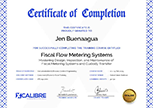
Upon successful completion of this training course, participants will be awarded a Certificate of Completion from XCalibre Training Centre, acknowledging their accomplishment. This certificate serves as a testament to their dedication to developing their skills and advancing their expertise in their respective fields.