
| Date | Venue | Fee | |
|---|---|---|---|
| 09 Nov - 13 Nov 2026 | Dubai – UAE | $ 5,950 | Register Now |
| 30 Nov - 04 Dec 2026 | Rome - Italy | $ 5,950 | Register Now |
| 21 Dec - 25 Dec 2026 | London - UK | $ 5,950 | Register Now |
| 08 Feb - 12 Feb 2027 | London - UK | $ 6,950 | Register Now |
| 05 Apr - 09 Apr 2027 | Paris - France | $ 6,950 | Register Now |
| 05 Jul - 09 Jul 2027 | Dubai – UAE | $ 5,950 | Register Now |
About the Course
Budgeting remains one of the most widely used management tools across organisations of every size and sector, yet it is also one of the most frequently misapplied. Poorly designed budget processes often produce unrealistic targets, consume significant management time, and generate reports that explain past performance without providing meaningful insight for future decisions. As organisations face increasing economic uncertainty, market volatility, and growing demands for accountability and agility, financial leaders must adopt progressive budgeting approaches that transform the budget from a historical reporting exercise into a strategic tool that supports performance, resource allocation, and long-term value creation.
This interactive 5-day Strategic Budget Planning and Control training course equips professionals with the knowledge, frameworks, and practical tools required to manage every stage of the budget cycle, from process design and strategic alignment to cost modelling, scenario planning, variance analysis, and the development of effective control mechanisms. It addresses both the technical and behavioural dimensions of budgeting, examining driver-based modelling, zero-based approaches, target setting, organisational incentives, and the factors that influence managerial decision-making and performance accountability.
Through practical exercises, budget simulations, and industry case studies, delegates will integrate macroeconomic variables, predictive analytics, and financial planning techniques to develop resilient budgeting models and strengthen organisational decision-making. Delegates will experience the complete budgeting process, from initial budget construction through executive review and board-level challenge, and will leave with practical tools, enhanced analytical capabilities, and a clear understanding of how to improve budgeting effectiveness, governance, and financial performance within their organisations.
Core Objectives
By the end of the training course, delegates will be able to:
- Assess the budget planning cycle and its connection to corporate strategy
- Apply driver-based and activity-based costing to build more accurate budgets
- Design and implement zero-based budgeting processes where appropriate
- Develop capital expenditure budgets grounded in proper investment appraisal
- Develop variance analysis routines that identify root causes and support corrective action
- Design budget governance structures with clear ownership and accountability
Training Approach
This training course combines structured instruction with hands-on budget modelling, cost analysis, and variance interpretation exercises each day. Group activities simulate real budget preparation and challenge meetings, exposing delegates to the negotiation and stakeholder management aspects of the process. Case material draws from manufacturing, services, and public sector contexts, so the learning applies across a range of organisational settings.
The Attendees
This training course is designed for finance professionals, budget holders, business leaders, and planning specialists responsible for developing, reviewing, challenging, or controlling budgets and financial plans that support organisational performance and strategic objectives.
A broad range of professionals will benefit, including but not limited to:
- CFOs
- Finance Directors
- Mid-Senior Managers
- Finance Managers
- Finance Controllers
- Management Accountants and Cost Analysts
- Budget Holders and Department Heads
- Strategic Planning and FP&A Professionals
- Internal Audit Professionals
Daily Discussion
DAY ONE: BUDGET STRATEGY, FRAMEWORKS, AND PROCESS DESIGN
- Executive Frameworks for Financial Planning
- Translating Corporate Strategy into Financial Metrics
- Advanced Budget Methodologies
- Structuring Agile Budgeting Processes
- Reconciling Executive Mandates with Operational Realities
- Formulating Macro-Level Financial Assumptions
DAY TWO: COST MODELLING, DRIVER-BASED BUDGETING, AND CAPEX PLANNING
- Analysing Cost Dynamics for Executive Decision-Making
- Strategic Cost Management and Value Creation
- Implementing Driver-Based Financial Modelling
- Enterprise-Wide Activity-Based Resource Allocation
- Institutionalising Zero-Based Budgeting Frameworks
- Strategic Capital Allocation and CapEx/OpEx Optimisation
DAY THREE: REVENUE BUDGETING, SCENARIO PLANNING, AND RISK ADJUSTMENT
- Advanced Revenue Forecasting Models
- Integrating S&OP with Executive Financial Planning
- Multi-Variable Scenario Planning and Stress Testing
- Formulating Corporate Contingency and Reserve Policies
- Embedding Risk Metrics into the Budgeting Lifecycle
- Designing Dynamic and Adaptive Budgeting Systems
DAY FOUR: BUDGET MONITORING, VARIANCE ANALYSIS, AND CONTROL
- Developing Enterprise Performance Monitoring Frameworks
- Advanced Variance Analysis for Strategic Intervention
- Executive-Level Root Cause Diagnostics
- Governing Financial Reallocations and Agile Amendments
- Designing Executive Budget Dashboards and KPI Reporting
- Designing High-Impact Board-Level Financial Reviews
DAY FIVE: BEHAVIOURAL DIMENSIONS, MODERN ALTERNATIVES, AND DIGITAL TOOLS
- The Psychology of Financial Targets and Organisational Behaviour
- Developing Performance-Driven Incentive Structures
- Transitioning to 'Beyond Budgeting' Methodologies
- Implementing Continuous Rolling Forecasts
- Digital Tools for Budgeting and Forecasting
- Executive Budget Simulation and Board-Level Defence
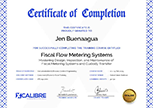
Certificate Awarded
Upon successful completion of this training course, participants will be awarded a Certificate of Completion from XCalibre Training Centre, acknowledging their accomplishment. This certificate serves as a testament to their dedication to developing their skills and advancing their expertise in their respective fields.