
| Date | Venue | Fee | |
|---|---|---|---|
| 07 Dec - 11 Dec 2026 | Dubai – UAE | $ 5,950 | Register Now |
| 05 Jul - 09 Jul 2027 | Dubai – UAE | $ 5,950 | Register Now |
| 06 Dec - 10 Dec 2027 | Dubai – UAE | $ 5,950 | Register Now |
About the Course
Global shipping and maritime infrastructure are operating in an increasingly complex financial environment characterised by market cyclicality, rising capital costs, decarbonisation investment requirements, geopolitical uncertainty, and tightening credit conditions. Shipping companies, ports, and maritime investors are under growing pressure to optimise capital structures, preserve liquidity, evaluate investment opportunities, and manage financial risks while maintaining long-term asset competitiveness. Increasing regulatory requirements, environmental investment obligations, and changing trade patterns are also reshaping capital allocation decisions and financing strategies across the maritime sector. Effective maritime finance capabilities have therefore become essential to supporting strategic decision-making, investment performance, and sustainable growth whilst enabling organisations to respond effectively to changing market conditions and emerging financial risks.
This interactive 5-day Maritime Finance Masterclass training course equips professionals with the knowledge, frameworks, and practical tools required to analyse, structure, and evaluate financial decisions across shipping companies, vessel assets, ports, terminals, and maritime infrastructure. It focuses on vessel valuation, shipping finance structures, debt capacity, project finance, port concessions, financial modelling, investment appraisal, and risk management, whilst examining contemporary issues such as environmental capital expenditure, carbon cost exposure, sanctions risk, refinancing pressure, and asset impairment. Through practical exercises, industry case studies, and financial modelling activities, delegates will develop the capabilities required to interpret maritime financial information, evaluate investment proposals, assess financing alternatives, and support commercially sound decisions aligned with risk appetite, liquidity requirements, and long-term asset strategies.
Core Objectives
The delegates will achieve the following objectives:
- Analyse maritime financial statements and shipping cash flow drivers
- Evaluate vessel valuation methods and asset price cycles
- Prepare structured debt service and covenant analysis for maritime assets
- Evaluate financing structures across loans, leases, bonds, and project finance arrangements
- Interpret port concession economics and infrastructure investment metrics
- Estimate financial exposure from fuel, freight, interest rate, and currency risk
- Develop financial recommendations for maritime investment and restructuring decisions
Training Approach
The training course uses direct instruction, finance templates, maritime data, and applied market references. This approach is suitable for both classroom and virtual delivery formats and maintains a strong connection between technical finance and shipping economics. Delegates review financial statements, valuation inputs, debt service structures, covenant terms, port concession metrics, and risk measures. Each module progresses from conceptual understanding to analytical application, calculation logic, and financial decision-making. Sector examples are drawn from shipping, ports, infrastructure, lending, and investment management to reinforce practical application and commercial decision-making. The approach builds confidence in reviewing proposals, testing assumptions, challenging valuations, and presenting financial decisions supported by sound risk analysis.
The Attendees
This training course is designed for finance, investment, banking, shipping, port, and infrastructure professionals responsible for evaluating, structuring, approving, or challenging financial decisions relating to vessels, terminals, and maritime trade flows, and is suitable for delegates with general finance knowledge, whilst specialist shipping finance experience is beneficial but not essential.
A broad range of professionals will benefit, including but not limited to:
- Chief Financial Officers
- Finance Managers
- Port and Terminal Investment Managers
- Bankers and Credit Analysts
- Treasury and Corporate Finance Specialists
- Private Equity and Infrastructure Fund Analysts
- Shipping Finance Professionals
- Marine Insurance and Risk Professionals
Daily Discussion
DAY ONE: MARITIME FINANCE FOUNDATIONS
- Shipping Company Financial Statements
- Vessel Asset Valuation
- Capital Structure Strategy
- Cash Flow Modelling
- Revenue and Voyage Economics
- Operating Cost Classifications
- Working Capital Needs
- Financial Covenant Design
DAY TWO: VESSEL FINANCE AND CREDIT ANALYSIS
- Senior Debt and Security Structures
- Loan to Value Ratios
- Debt Service Cover Ratios
- Charter-Backed and Export Credit Financing
- Sale-and-Leaseback Structures
- Balloon Repayment Exposure
- Security Packages and Mortgage Enforcement
- Credit Risk Rating Factors
DAY THREE: INVESTMENT APPRAISAL AND VALUATION
- Discounted Cash Flow Valuation
- Net Present Value Analysis
- Internal Rate of Return
- Residual Value Assumptions
- Sensitivity Analysis Methods
- Scenario Testing Discipline
- Asset Impairment Indicators
- Portfolio and Asset Allocation Metrics
DAY FOUR: PORTS, TERMINALS, AND PROJECT FINANCE
- Port Concession Finance
- Terminal Revenue Models
- Infrastructure Debt Structures
- Demand Risk Allocation
- Tariff and Throughput Analysis
- Public-Private Partnership Metrics
- Project Finance and Completion Guarantees
- Refinancing and Debt Maturity Risk
DAY FIVE: RISK, HEDGING, AND RESTRUCTURING
- Freight Rate Risk Exposure
- Bunker Cost Risk Exposure
- Interest Rate Risk Management
- Currency Risk Management
- Counterparty and Sanctions Risk
- Liquidity Stress Indicators
- Debt Restructuring Options
- Green Shipping Finance and Sustainability-Linked Lending
Certificate Awarded
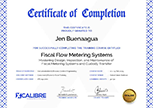
Upon successful completion of this training course, participants will be awarded a Certificate of Completion from XCalibre Training Centre, acknowledging their accomplishment. This certificate serves as a testament to their dedication to developing their skills and advancing their expertise in their respective fields.