
| Date | Venue | Fee | |
|---|---|---|---|
| 05 Oct - 09 Oct 2026 | London - UK | $ 5,950 | Register Now |
| 21 Dec - 25 Dec 2026 | Dubai – UAE | $ 5,950 | Register Now |
About the Course
This interactive 5-day Fundamentals of the Internet of Things (IoT) training course provides a comprehensive introduction to one of the most transformative technologies of the digital era. It offers a structured exploration of IoT concepts, architectures, hardware, connectivity, platforms, and security, presented in clear and practical learning modules. Delegates gain an end-to-end understanding of how IoT systems function, from sensors and actuators through networking protocols and cloud platforms to data processing and user applications. The content covers key technologies, including microcontrollers, development boards, wireless communication options, and essential networking protocols used in modern IoT systems. A strong emphasis is placed on IoT security, privacy, and governance, addressing vulnerabilities, threat models, authentication, encryption, and security frameworks. Through this foundation, delegates acquire the essential knowledge required to understand how IoT devices interact, communicate, and create value across industries.
Delivered through an engaging and application-driven approach, the training combines theoretical fundamentals with hands-on demonstrations and real-world insights. Delegates explore cloud platforms such as AWS IoT, Azure IoT, Google IoT Core, and ThingsBoard, gaining practical awareness of device management and data integration workflows. They work with tools like Node-RED to visualise IoT data flows and experience application development in a non-coding environment. It also introduces advanced developments, including AIoT, edge intelligence, robotics integration, and digital twins to prepare delegates for emerging trends. IoT use cases across smart cities, industrial automation, healthcare, agriculture, and transportation illustrate how connected systems create operational, economic, and strategic value. They are equipped to evaluate IoT solutions, collaborate with technical teams, and contribute effectively to IoT initiatives within their organisations.
Core Objectives
By the end of the training course, delegates will be able to:
- Explain the fundamentals, evolution, and significance of the Internet of Things (IoT) within digital transformation and Industry 4.0, including key ecosystem components and architecture models
- Describe IoT hardware elements such as microcontrollers, development boards, sensors, and actuators, and explain their roles within end-to-end IoT systems
- Evaluate connectivity and networking technologies—including short-range, long-range, cellular, and IoT-specific protocols—and determine their suitability for various use cases
- Trace the IoT data pipeline from device-level collection to cloud processing, comparing major IoT platforms, understanding APIs and interoperability, and distinguishing between edge and cloud computing
- Apply core IoT security principles by identifying vulnerabilities, implementing authentication and encryption mechanisms, and aligning with frameworks such as OWASP IoT Top 10, GDPR, and ISO/IEC 30141
- Interpret IoT analytics dashboards to monitor device performance, analyse trends, and derive actionable insights that support operational and strategic decision-making
- Examine real-world IoT applications and emerging trends—including AIoT, digital twins, robotics, and edge AI—while creating basic IoT workflows using tools such as Node-RED in a non-coding environment
Training Approach
The training course employs an engaging, practice-oriented methodology that combines clear conceptual instruction with hands-on demonstrations, real-world case studies, and interactive learning activities. The approach is designed to make IoT accessible to professionals with diverse backgrounds, ensuring technical concepts are explained clearly while providing sufficient depth for practical application.
The Attendees
This training course is ideal for professionals who need to understand IoT fundamentals, evaluate IoT solutions, or support IoT implementation and management within their organisations, particularly those involved in digital transformation, technology evaluation, product development, or operational technology management.
It will be valuable to the professionals, but not limited to the following:
- IT Managers and Directors
- Data Analysts and Data Scientists
- Product Managers and Product Owners
- Project Managers
- Business Analysts and Strategy Consultants
- Digital Transformation Leaders
- Operations and Facility Managers
- Industrial Engineers and Manufacturing Professionals
- Healthcare Administrators and Medical Technology
- Smart City Planners and Urban Development Professionals
- Agriculture and Environmental Professionals
- Network Engineers and IT Infrastructure Specialists
- Security Professionals and Cybersecurity Specialists
- Software Developers and Application Engineers
- System Integrators and Solution Architects
- Vendor Management and Procurement Professionals
- Energy and Utilities Professionals
- Transportation and Logistics Managers
- Technical Support and Service Delivery Professionals
- Entrepreneurs and Innovation Leaders
Daily Discussion
DAY ONE: FOUNDATIONS OF IoT & CORE CONCEPTS
- What is IoT? Definitions, History, & Evolution
- Key IoT Components (Sensors, Devices, Gateways, Connectivity, Cloud)
- How IoT Works: Device > Network > Cloud > App > User
- IoT Architecture Models: 3-Layer, 5-Layer, and Edge–Cloud Architecture
- IoT Ecosystem, Stakeholders & Value Chains
- Industry Growth, Trends, and Economic Impact
- Overview of IoT Applications: Smart Homes, Cities, Healthcare, Transport, Industry
DAY TWO: IoT DEVICES, SENSORS, HARDWARE & CONNECTIVITY
- IoT Hardware Basics: Microcontrollers, Boards (Arduino, ESP32, Raspberry Pi)
- Types of Sensors & Actuators and How They Work
- Device Management & Firmware Basics
- Wireless Connectivity: WiFi, Bluetooth, BLE, NFC
- Long-Range Connectivity: LPWAN, LoRaWAN, Sigfox
- Cellular IoT Technologies: 3G/4G/5G, NB-IoT, LTE-M
- Gateways & Edge Devices: Roles and Functionalities
DAY THREE: IoT NETWORKING, CLOUD PLATFORMS & DATA PROCESSING
- IoT Networking Protocols: MQTT, CoAP, HTTP/HTTPS
- IoT Data Pipeline: Collection > Transmission > Storage > Processing
- Cloud Computing for IoT: Basics & Service Models (PaaS, SaaS, IaaS)
- Major IoT Cloud Platforms (AWS IoT, Azure IoT, Google IoT Core, ThingsBoard)
- APIs in IoT & Interoperability Standards
- Edge Computing vs Cloud Computing
- Basic Analytics & Dashboards for IoT Data
DAY FOUR: IoT SECURITY, PRIVACY & GOVERNANCE
- Importance of IoT Security: Real Cases of IoT Attacks
- Common Vulnerabilities in IoT Devices
- Device & Network Security Standards (OWASP IoT Top 10)
- Authentication, Encryption & Key Management for IoT
- Privacy, Data Protection & Compliance (GDPR, ISO/IEC 30141)
- Secure Firmware Updates & Device Hardening
- Security-by-Design: Governance, Ethics & Good Practice Frameworks
DAY FIVE: IoT USE CASES, HANDS-ON & FUTURE TRENDS
- IT and Application Control Design
- Smart Cities Use Case (e.g., Barcelona Smart City)
- Smart Homes & Buildings (Energy, HVAC, Access Control, Automation)
- Industrial IoT (IIoT), Manufacturing, & Predictive Maintenance
- Healthcare IoT: Wearables, Remote Patient Monitoring
- Agriculture IoT: Precision Farming & Sensors
- Hands-On Demonstration (Non-Coding): Using Node-RED
- The Future of IoT: AI + IoT (AIoT), Digital Twins, Robotics, Edge AI
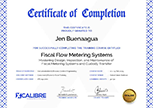
Certificate Awarded
Upon successful completion of this training course, participants will be awarded a Certificate of Completion from XCalibre Training Centre, acknowledging their accomplishment. This certificate serves as a testament to their dedication to developing their skills and advancing their expertise in their respective fields.