

| Date | Venue | Fee | |
|---|---|---|---|
| 03 Aug - 07 Aug 2026 | Dubai – UAE | $ 5,950 | Register Now |
| 19 Oct - 23 Oct 2026 | Dubai – UAE | $ 5,950 | Register Now |
| 14 Dec - 18 Dec 2026 | London - UK | $ 5,950 | Register Now |
About the Course
The Certified in Risk and Information Systems Control (CRISC) training course is a globally recognised credential for professionals who manage enterprise risk and ensure effective information systems control in an increasingly AI-driven environment. This enhanced training provides a structured pathway for understanding how IT risk integrates into business strategy, governance, and organisational resilience. Delegates will develop the capability to assess threats, vulnerabilities, and exposures while designing and maintaining strong control environments. The content emphasises aligning technology risks with business priorities, supporting informed decision-making, and ensuring adherence to international standards such as COBIT, ISO, and NIST. What distinguishes this learning experience is its integration of advanced AI methodologies—including Large Language Models, Machine Learning, Fuzzy Logic, and Explainable AI—that enhance risk analysis, automate assessments, and strengthen control evaluation. The approach ensures that participants are prepared to apply both traditional and AI-enhanced techniques in modern governance, risk, and compliance settings.
Delivered through an engaging and interactive structure, the experience fosters analytical thinking, strategic judgement, and practical application across a range of risk management scenarios. Delegates will translate theory into actionable frameworks, contribute to proactive risk identification, and communicate effectively with key organisational stakeholders. The content supports capability-building across IT, audit, security, and business functions, enabling professionals to respond to emerging risks, including those related to AI governance and model assurance. Participants will strengthen resource allocation, control assurance processes, and readiness for evolving regulatory requirements surrounding artificial intelligence. Graduates will gain the confidence needed to support enterprise-wide risk initiatives in both conventional and AI-augmented environments. The experience ultimately prepares professionals to uphold robust information systems control and earn the industry-recognised CRISC certification.
Core Objectives
By the end of the training course, delegates will be able to:
- Explain core governance and risk management principles, including AI ethics, accountability, explainability, bias mitigation, and model oversight
- Use Generative AI (LLMs) to interpret complex regulations and accelerate policy analysis, mapping requirements to governance and control frameworks
- Identify and assess threats, vulnerabilities, and business impacts using traditional techniques combined with AI-enhanced threat intelligence and predictive analytics
- Apply Machine Learning, Artificial Neural Networks, and Fuzzy Logic to predict emerging risks, quantify uncertain assessments
- Evaluate control effectiveness through AI-assisted evidence analysis, automating log reviews, audit summaries, and compliance checks
- Develop balanced risk response strategies supported by AI-generated reporting, ensuring effective communication with executives and alignment with business continuity needs
- Design, implement, and monitor information systems control frameworks aligned with international standards (COBIT, NIST, ISO), incorporating Explainable AI, lifecycle management, and automated compliance tools
Training Approach
The training course adopts an innovative, interactive methodology that combines expert-led discussions, practical exercises, and scenario-based learning to reinforce the real-world application of CRISC principles enhanced with artificial intelligence capabilities. Delegates engage in collaborative problem-solving and knowledge-sharing activities that bridge traditional risk management practices with emerging AI technologies.
The Attendees
This training course is ideal for professionals responsible for managing, assessing, or supporting enterprise risk and information systems control, particularly those seeking to strengthen their understanding of IT risk governance, emerging AI-related risks, and the use of artificial intelligence to enhance risk management practices.
It will be valuable to the professionals, but not limited to the following:
- Chief Information Officers (CIOs)
- Chief Risk Officers (CROs)
- IT Risk Managers and Analysts
- Information Security Managers
- IT Governance and Compliance Officers
- Internal and External Auditors
- Cybersecurity Professionals
- Digital Transformation Leaders
- AI/ML Professionals and Data Scientists
- IT Project Managers and System Administrators
- Business Continuity and Disaster Recovery Specialists
- Professionals preparing for the ISACA CRISC examination
Daily Discussion
DAY ONE: GOVERNANCE AND RISK MANAGEMENT FRAMEWORKS
- Governance and Oversight Structures
- IT Risk Integration with Business Goals
- Roles, Ownership, and Accountability
- Building a Risk-Aware Culture
- Policy and Control Frameworks
- Governance-Driven Performance
- AI for Governance and Risk Management
- AI Ethics & Governance Module
- Introduction to GenAI (LLM) Assisted Policy & Regulatory Analysis
- Rule-Based / Expert Systems for Compliance Enforcement
DAY TWO: IT RISK IDENTIFICATION AND ANALYSIS
- Threats and Vulnerabilities Mapping
- AI Techniques for Risk Identification
- Business Impact and Critical Assets
- Risk Scenario Development
- Risk Appetite and Tolerance Levels
- Inherent and Residual Risk Analysis
- Stakeholder Roles in Risk Ownership
DAY THREE: RISK ASSESSMENT AND RESPONSE PLANNING
- Assessment Models and Techniques
- Control Evaluation and Effectiveness
- Likelihood and Impact Determination
- AI-Enabled Risk Assessment using Fuzzy Likelihood–Impact Models
- Risk Response Prioritisation
- Resource Allocation and Planning
- Risk Communication and Decisions
- AI-generated Risk Communication Drafts (Board-friendly)
DAY FOUR: RISK MONITORING AND REPORTING
- Key Risk and Performance Indicators
- Ongoing Risk Monitoring Processes
- Audit and Compliance Coordination
- Reporting to Senior Management
- Automation and Dashboard Tools
- Integrating Risk into Decision-Making
- Introduction to Explainable AI (XAI) for Risk Decisions
- Overview of Alibi (Open-source Explainability Library)
DAY FIVE: INFORMATION SYSTEMS CONTROL DESIGN AND MAINTENANCE
- IT and Application Control Design
- Access and Security Management
- Change and Configuration Control
- AI-supported Change Management Risk Assessment
- Incident and Continuity Management
- Control Testing and Validation
- Compliance and Governance Alignment (COBIT, NIST, and ISO Standards)
- Control Design with AI Governance Requirements
Certificate Awarded
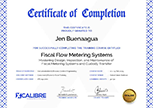
Upon successful completion of this training course, participants will be awarded a Certificate of Completion from XCalibre Training Centre, acknowledging their accomplishment. This certificate serves as a testament to their dedication to developing their skills and advancing their expertise in their respective fields.
Course Enquiry

A XCalibre Professional Development Certification will be given to the delegates upon successful completion of this training course.