
| Date | Venue | Fee | |
|---|---|---|---|
| 19 Jul - 23 Jul 2027 | Dubai – UAE | $ 5,950 | Register Now |
| 06 Sep - 10 Sep 2027 | London - UK | $ 6,950 | Register Now |
| 08 Nov - 12 Nov 2027 | Virtual/Live | $ 5,950 | Register Now |
About the Course
Sustaining hydrocarbon production from increasingly complex reservoirs requires effective solutions to formation damage, restricted reservoir inflow and declining well productivity. Reservoir heterogeneity, variable formation properties and challenging downhole environments require stimulation strategies that integrate reservoir evaluation, treatment chemistry, mechanical integrity and operational control. Engineering teams must distinguish between near-wellbore damage, flow restrictions and reservoir limitations before selecting appropriate stimulation methods. Inadequate candidate screening, incompatible treatment fluids, ineffective placement or poorly controlled injection conditions can result in limited productivity gains, formation damage, equipment failures and unnecessary intervention expenditure.
This 5-day Well Stimulation training course provides a practical engineering approach to stimulation candidate selection, treatment design, operational execution and performance evaluation. Delegates will examine formation damage mechanisms, matrix acidising, acid fracturing, hydraulic fracturing, stimulation fluid systems and treatment placement strategies across different reservoir conditions. It integrates reservoir diagnostics, fluid–rock compatibility, fracture design parameters, pressure analysis, equipment requirements and treatment quality assurance. Particular attention is given to stimulation effectiveness, diversion techniques, fracture conductivity, proppant transport, operational risks and post-treatment diagnostics. Through engineering calculations, laboratory data interpretation, treatment schedules and field-based scenarios, delegates will strengthen their ability to select suitable stimulation technologies, evaluate treatment constraints, diagnose operational deviations and assess productivity improvements against technical and economic objectives.
Core Objectives
The delegates will achieve the following objectives:
- Diagnose formation damage, near-wellbore restrictions and reservoir conditions affecting well productivity
- Evaluate stimulation candidates using reservoir characteristics, well performance data and treatment feasibility
- Select matrix acidising, acid fracturing and hydraulic fracturing methods for specific formation requirements
- Design stimulation fluid systems, treatment volumes and placement strategies based on reservoir compatibility
- Assess fracture geometry, conductivity, proppant requirements and treatment operating limits
- Verify stimulation execution parameters, equipment readiness and operational risk controls
- Evaluate post-treatment productivity, stimulation effectiveness and economic performance
Training Approach
This training course will use reservoir datasets, well performance records, laboratory compatibility results, stimulation treatment schedules and field case studies to examine practical stimulation engineering decisions. Delegates will interpret pressure transient data, evaluate formation damage indicators, compare acid systems, assess fluid–rock interactions and calculate treatment parameters. Applied exercises will include candidate screening, matrix acidising design, fluid compatibility assessment, fracture geometry evaluation, proppant selection, pumping schedule interpretation, treatment pressure diagnostics and post-stimulation productivity analysis. Representative stimulation design software outputs and engineering calculations will support comparisons between treatment alternatives. Case studies involving acid incompatibility, ineffective diversion, premature screenout, excessive treating pressure, fluid leakoff and disappointing productivity response will support technical troubleshooting, operational risk assessment and treatment performance evaluation.
The Attendees
This training course is designed for professionals involved in well stimulation design, reservoir productivity enhancement, treatment execution, production optimisation and well intervention operations.
A broad range of professionals will benefit, including but not limited to:
- Stimulation Engineers
- Petroleum Engineers
- Production Engineers
- Reservoir Engineers
- Well Intervention Engineers
- Completion Engineers
- Hydraulic Fracturing Engineers
- Acidising Specialists
- Well Operations Supervisors
- Subsurface Technical Specialists
Daily Discussion
DAY ONE: WELL PRODUCTIVITY DIAGNOSTICS AND STIMULATION SELECTION
- Reservoir Deliverability Assessment
- Formation Damage Mechanisms
- Skin Factor and Near-Wellbore Flow Restrictions
- Pressure Transient Analysis for Stimulation Diagnosis
- Stimulation Candidate Screening Criteria
- Treatment Feasibility and Productivity Potential
DAY TWO: MATRIX ACIDISING AND CHEMICAL STIMULATION
- Acid–Rock Reaction Mechanisms
- Sandstone Acidising Fluid Selection
- Carbonate Matrix Acidising Design
- Fluid Compatibility and Formation Damage Prevention
- Acid Diversion and Placement Techniques
- Matrix Treatment Volume and Injection Rate Design
DAY THREE: HYDRAULIC FRACTURING AND ACID FRACTURING
- Fracture Initiation and Propagation Mechanics
- In-Situ Stress and Fracture Containment
- Hydraulic Fracture Geometry Design
- Proppant Selection and Fracture Conductivity
- Acid Fracturing Design for Carbonate Reservoirs
- Fracturing Fluid Systems and Leakoff Control
DAY FOUR: STIMULATION EXECUTION AND OPERATIONAL CONTROL
- Stimulation Equipment Configuration
- Treatment Pumping Schedule Verification
- Real-Time Treatment Pressure Diagnostics
- Diversion Performance and Treatment Placement Control
- Screenout Prevention and Treatment Diagnostics
- Stimulation Safety and Well Integrity Assurance
DAY FIVE: POST-STIMULATION PERFORMANCE AND TREATMENT OPTIMISATION
- Post-Treatment Flowback and Well Cleanup
- Stimulation Pressure Response Interpretation
- Productivity Index and Skin Factor Evaluation
- Fracture Performance and Conductivity Assessment
- Treatment Effectiveness and Economic Evaluation
- Stimulation Failure Diagnosis and Re-Stimulation Screening
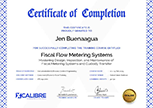
Certificate Awarded
Upon successful completion of this training course, participants will be awarded a Certificate of Completion from XCalibre Training Centre, acknowledging their accomplishment. This certificate serves as a testament to their dedication to developing their skills and advancing their expertise in their respective fields.