
| Date | Venue | Fee | |
|---|---|---|---|
| 01 Nov - 05 Nov 2027 | Virtual/Live | $ 5,950 | Register Now |
About the Course
Well completion systems play a critical role in transforming drilled wells into safe, productive and commercially viable assets. Increasing reservoir complexity, extended-reach wells, challenging downhole environments and evolving production requirements demand completion solutions that balance reservoir deliverability, mechanical reliability, operational flexibility and long-term well integrity. Engineering teams must evaluate tubing configurations, sand control requirements, artificial lift compatibility, zonal isolation, pressure containment and downhole equipment performance while considering installation risks and future intervention needs. Inadequate completion design or equipment selection can contribute to restricted production, premature component failure, loss of zonal isolation, excessive intervention costs and reduced well life.
This 5-day Applied Well Completion training course provides a practical engineering approach to completion planning, system design, equipment selection, installation assurance and performance evaluation. Delegates will examine completion architectures, tubing and packer systems, inflow management, sand control technologies, downhole safety equipment and well barrier requirements across different reservoir and operating conditions. It integrates completion load analysis, pressure and temperature considerations, equipment qualification, installation procedures, testing requirements and operational surveillance. Particular attention is given to completion reliability, artificial lift interfaces, intelligent completion applications, failure diagnostics and intervention readiness. Through engineering calculations, equipment specifications, completion schematics and field-based scenarios, delegates will strengthen their ability to select suitable completion configurations, verify operational limits, assess integrity risks and support reliable production throughout the well lifecycle.
Core Objectives
The delegates will achieve the following objectives:
- Evaluate reservoir, production and operating conditions affecting completion system design
- Select completion architectures, tubing configurations and downhole equipment for specific well requirements
- Assess tubing loads, packer performance and pressure containment under anticipated operating conditions
- Compare sand control, inflow management and artificial lift integration strategies
- Verify completion installation, equipment testing and well barrier requirements
- Diagnose completion equipment failures, integrity deficiencies and production restrictions
- Optimise completion reliability, intervention readiness and long-term well performance
Training Approach
This training course will use completion schematics, equipment specifications, well design data, operating envelopes and field case studies to examine practical completion engineering decisions. Delegates will evaluate tubing and packer selection, calculate completion loads, review pressure and temperature limitations, compare sand control options and assess inflow performance requirements. Applied exercises will include completion configuration selection, tubing stress evaluation, barrier verification, equipment compatibility checks, installation sequence reviews, pressure test interpretation, completion failure analysis and intervention planning. Relevant API, ISO and NORSOK requirements will be considered alongside equipment manufacturer specifications, operator standards and site-specific well integrity procedures. Case studies involving tubing leakage, packer failure, sand production, premature water breakthrough, downhole safety valve malfunction and completion installation difficulties will support engineering problem-solving and completion performance assessment.
The Attendees
This training course is designed for professionals involved in well completion design, equipment selection, installation, production optimisation, well integrity and intervention planning.
A broad range of professionals will benefit, including but not limited to:
- Completion Engineers
- Petroleum Engineers
- Well Engineers
- Drilling Engineers
- Production Engineers
- Reservoir Engineers
- Well Integrity Engineers
- Well Intervention Engineers
- Completion Operations Supervisors
- Technical Specialists in Downhole Equipment
Daily Discussion
DAY ONE: COMPLETION ENGINEERING AND WELL DESIGN REQUIREMENTS
- Completion Design Basis for Well Objectives
- Reservoir Deliverability Assessment
- Completion Architecture Selection
- Tubing Sizing and Material Selection
- Completion Operating Envelopes under HPHT Conditions
- Completion Design Risk Assessment
DAY TWO: DOWNHOLE EQUIPMENT AND COMPLETION SYSTEM DESIGN
- Production Tubing Stress Analysis
- Packer Selection Criteria
- Subsurface Safety Valve Control Systems
- Sand Control Screen Selection
- Inflow Control Devices and Zonal Isolation Systems
- Completion Equipment Qualification Requirements
DAY THREE: COMPLETION INSTALLATION AND WELL INTEGRITY
- Completion Assembly and Running Procedures
- Tubing Movement and Packer Load Verification
- Well Barrier Design and Verification (ISO 16530-1)
- Completion Pressure Testing Acceptance Criteria
- Completion Fluids for Formation Damage Control
- Installation Contingencies with Operational Risk Control
DAY FOUR: COMPLETION PERFORMANCE AND PRODUCTION OPTIMISATION
- Completion Inflow–Outflow Performance Analysis
- Artificial Lift Integration Interfaces
- Intelligent Completion Systems for Flow Control
- Multizone Production with Water Breakthrough Management
- Real-Time Completion Surveillance Diagnostics
- Production Restrictions Troubleshooting
DAY FIVE: COMPLETION RELIABILITY AND WELL LIFECYCLE MANAGEMENT
- Completion Failure Mechanisms with Root Cause Analysis
- Tubing Corrosion, Erosion and Material Degradation
- Packer and Downhole Safety Valve Reliability
- Well Intervention Strategy Selection
- Completion Integrity Restoration Options
- Completion Lifecycle Performance Assessment
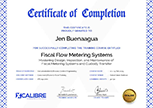
Certificate Awarded
Upon successful completion of this training course, participants will be awarded a Certificate of Completion from XCalibre Training Centre, acknowledging their accomplishment. This certificate serves as a testament to their dedication to developing their skills and advancing their expertise in their respective fields.