
| Date | Venue | Fee | |
|---|---|---|---|
| 11 May - 15 May 2026 | Dubai – UAE | $ 5,950 | Register Now |
| 17 Aug - 21 Aug 2026 | Dubai – UAE | $ 5,950 | Register Now |
| 02 Nov - 06 Nov 2026 | Dubai – UAE | $ 5,950 | Register Now |
About the Course
Water distribution networks operate within increasingly demanding performance environments, where pressure stability, energy efficiency, service continuity, and infrastructure resilience are critical operational priorities. Automated valve systems play a central role in regulating flow, maintaining pressure zones, mitigating transients, and supporting real-time network responsiveness. However, poorly configured control strategies, inadequate actuator selection, unstable regulation, and weak system integration can lead to pressure fluctuations, leakage escalation, energy inefficiency, equipment wear, and service disruptions. As utilities modernise their networks and integrate digital monitoring platforms, engineering teams must strengthen their technical capability to align hydraulic performance with automation reliability while ensuring long-term asset sustainability.
This 5-day Valve Automation and Control in Water Distribution Systems training course provides a structured and engineering-focused framework for enhancing the performance, reliability, and integration of automated valve systems within water distribution networks. It equips professionals with the analytical tools and practical insights required to evaluate hydraulic behaviour, optimise control responsiveness, strengthen remote monitoring capability, and improve operational resilience. Emphasis is placed on disciplined decision-making, structured troubleshooting, and lifecycle-oriented planning to ensure that automation investments translate into measurable performance outcomes. By reinforcing technical competence and operational governance, the programme supports utilities and industrial operators in reducing non-revenue water, controlling energy consumption, extending asset life, and maintaining service reliability across increasingly complex distribution environments.
Core Objectives
The delegates will achieve the following objectives:
- Analyse hydraulic performance within water distribution networks to identify pressure instability, energy inefficiencies, and flow control limitations
- Evaluate valve selection and actuator configurations to ensure suitability for operational demand and system pressure profiles
- Design structured pressure and flow regulation strategies that enhance network stability and minimise leakage risk
- Integrate automated valve systems within supervisory control environments to strengthen monitoring accuracy and operational responsiveness
- Diagnose automation-related performance issues using systematic troubleshooting and stability assessment methodologies
- Optimise control parameters and operational settings to improve energy efficiency and long-term asset reliability
- Formulate lifecycle-oriented improvement plans that enhance resilience, reduce non-revenue water, and support sustainable network performance
Training Approach
This training course is delivered through structured technical facilitation, applied hydraulic analysis workshops, and automation control evaluation exercises aligned with real water distribution operating environments. The methodology integrates practical problem-solving, system performance assessment, and control optimisation modelling to strengthen technical decision-making and operational reliability.
The Attendees
This training course is suitable for engineering and technical professionals responsible for valve automation, pressure management, and operational reliability within water distribution and utility networks.
A broad range of professionals will benefit, including but not limited to:
- Water Distribution Engineers
- Mechanical Engineers
- Instrumentation and Control Engineers
- Automation and SCADA Engineers
- Electrical Engineers
- Maintenance and Reliability Engineers
- Asset Management Engineers
- Operations and Network Supervisors
- Commissioning Engineers
- Non-Revenue Water (NRW) and Leakage Control Specialists
- Utility Performance and Optimisation Engineers
- Technical Authorities in Water Utilities
Daily Discussion
DAY ONE: VALVE SELECTION, SIZING, AND HYDRAULIC PERFORMANCE
- Valve Types and Application Suitability in Distribution Networks
- Flow Coefficient (Cv) Determination and Sizing Calculations
- Pressure Drop and Head Loss Evaluation
- Valve Authority and Control Stability
- Cavitation Risk Assessment and Mitigation
- Hydraulic Behaviour under Variable Demand Conditions
DAY TWO: ACTUATOR ENGINEERING AND CONTROL HARDWARE
- Electric, Hydraulic, and Pneumatic Actuator Technologies
- Torque Requirements and Actuator Sizing Calculations
- Positioners, Feedback Systems, and Signal Accuracy
- Fail-Safe Design and Redundancy Strategy
- Power Supply Design and Backup Configuration
- Mechanical Stress, Wear, and Operational Limits
DAY THREE: PRESSURE CONTROL AND AUTOMATION STRATEGIES
- Pressure Reducing Valve (PRV) Automation Design
- PID-Based Flow and Pressure Control
- Lead–Lag and Demand-Based Valve Operation
- Transient Pressure and Surge Mitigation
- Stability Analysis and Oscillation Troubleshooting
- District Metered Area (DMA) Pressure Optimisation
DAY FOUR: SCADA INTEGRATION AND NETWORK COMMUNICATION
- SCADA Architecture in Water Utilities
- PLC and RTU Integration with Valve Systems
- Communication Protocols (Modbus, DNP3, Ethernet/IP)
- Remote Monitoring and Control Logic Implementation
- Alarm Management and Event Logging Strategy
- Cybersecurity Considerations in Water Infrastructure
DAY FIVE: RELIABILITY, PERFORMANCE OPTIMISATION, AND LIFECYCLE MANAGEMENT
- Commissioning Procedures and Performance Verification
- Preventive and Predictive Maintenance Strategy
- Failure Modes and Root Cause Analysis
- Leakage Reduction through Pressure Optimisation
- Lifecycle Cost Evaluation and Asset Planning
- Development of a Valve Automation Improvement Plan
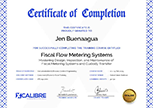
Certificate Awarded
Upon successful completion of this training course, participants will be awarded a Certificate of Completion from XCalibre Training Centre, acknowledging their accomplishment. This certificate serves as a testament to their dedication to developing their skills and advancing their expertise in their respective fields.