
| Date | Venue | Fee | |
|---|---|---|---|
| 13 Jul - 17 Jul 2026 | Dubai – UAE | $ 5,950 | Register Now |
| 21 Sep - 25 Sep 2026 | London - UK | $ 5,950 | Register Now |
| 16 Nov - 20 Nov 2026 | Dubai – UAE | $ 5,950 | Register Now |
About the Course
Water utilities and industrial water operators are undergoing rapid digital transformation driven by infrastructure ageing, regulatory scrutiny, sustainability targets, and pressure to reduce non-revenue water and energy consumption. Smart water networks integrate sensing technologies, IoT connectivity, and advanced analytics to provide real-time visibility across distribution systems, pumping stations, reservoirs, and treatment facilities. However, digital capability alone does not guarantee operational improvement. Effective implementation requires structured data governance, resilient communication infrastructure, cybersecurity protection aligned with IEC 62443 principles, and asset lifecycle discipline consistent with ISO 55000 frameworks. Regulatory water quality reporting and performance accountability further increase the need for reliable monitoring and defensible operational decisions.
This interactive 5-day Smart Water Networks training course strengthens professional capability in designing, integrating, and operating digitally enabled water systems. It develops technical understanding of sensor deployment strategies, IoT architecture, system interoperability, asset intelligence, and operator-centric decision support. Delegates enhance their ability to interpret integrated data streams, assess network performance, manage cybersecurity risks, and support regulatory compliance while maintaining operational continuity. Through structured technical discussion and applied analysis, it equips engineers, utility managers, and technical authorities to leverage digital infrastructure for improved network reliability, performance transparency, and sustainable water management outcomes.
Core Objectives
The delegates will achieve the following objectives:
- Determine optimal sensor deployment and monitoring coverage to support regulatory-compliant water network visibility
- Oversee IoT integration and communication resilience across distributed water infrastructure
- Scrutinise integrated SCADA, GIS, and asset data to identify operational risks and performance gaps
- Govern cybersecurity safeguards in connected water systems in line with IEC 62443 principles
- Align digital monitoring practices with ISO 55000 asset management objectives to enhance lifecycle performance
- Optimise network stability, pressure control, and non-revenue water reduction through data-driven operational insights
- Strengthen operator decision-support capability to improve real-time incident response and system reliability
Training Approach
This training course is delivered through structured technical facilitation, system-based discussions, and analysis of real smart water operational scenarios aligned with regulatory and asset management standards. Delegates engage in collaborative problem-solving exercises to interpret data trends, evaluate network performance, and strengthen operator decision-making in digitally enabled water environments.
The Attendees
This training course is suitable for professionals responsible for the planning, operation, digital transformation, and performance optimisation of water distribution and treatment systems within municipal, industrial, and regulated utility environments.
A broad range of professionals will benefit, including but not limited to:
- Water Utility Engineers
- Smart Infrastructure and Digital Transformation Managers
- SCADA and Automation Engineers
- Asset Management and Maintenance Engineers
- Water Network Operations Managers
- IoT and Telemetry System Engineers
- Regulatory Compliance and Water Quality Officers
- Infrastructure Planning and Development Engineers
- Cybersecurity and OT Security Professionals in Utilities
- Technical Authorities and Engineering Supervisors
Daily Discussion
DAY ONE: SMART SENSING & NETWORK VISIBILITY
- Water Network Monitoring Architecture and Hydraulic Fundamentals
- Sensor Technologies for Flow, Pressure, Level, And Water Quality
- Sensor Placement Strategy and Coverage Optimisation
- Real-Time Data Acquisition and Telemetry Systems
- Sensor Calibration, Accuracy, and Lifecycle Management
- Regulatory Compliance in Monitoring and Water Quality Reporting
DAY TWO: IoT INFRASTRUCTURE & CONNECTED OPERATIONS
- IoT Architecture in Water Distribution Networks
- Communication Technologies (LoRaWAN, NB-IoT, RF, Cellular)
- Edge Computing and Distributed Sensing
- Data Transmission Reliability and Redundancy Planning
- Cybersecurity Controls in Smart Water Systems (IEC 62443 overview)
- Operational Resilience and Business Continuity Planning
DAY THREE: DATA INTEGRATION & ASSET INTELLIGENCE
- Data Integration Platforms and System Interoperability
- SCADA, GIS, and Asset Management Integration
- Digital Twins and Hydraulic Modelling Applications
- Data Validation and Governance Frameworks
- Predictive Analytics for Leak Detection and Asset Failure
- Asset Lifecycle Optimisation Aligned with ISO 55000 principles
DAY FOUR: OPERATOR-CENTRIC NETWORK MANAGEMENT
- Human-Machine Interface Design and Usability
- Alarm Management and Event Prioritisation
- Operator Decision-Support Systems
- Real-time Operational Response and Field Coordination
- Incident Management and Regulatory Communication
- Operator Competency Development in Digital Environments
DAY FIVE: DATA-DRIVEN OPTIMISATION & SUSTAINABLE PERFORMANCE
- Non-revenue Water Reduction Strategies
- Pressure Management and Smart Control Optimisation
- Energy Efficiency in Pumping and Distribution
- Performance Benchmarking and Regulatory Reporting
- Continuous Improvement through Operational Analytics
- Long-term Digital Transformation Strategy
Certificate Awarded
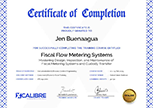
Upon successful completion of this training course, participants will be awarded a Certificate of Completion from XCalibre Training Centre, acknowledging their accomplishment. This certificate serves as a testament to their dedication to developing their skills and advancing their expertise in their respective fields.