
| Date | Venue | Fee | |
|---|---|---|---|
| 01 Jun - 05 Jun 2026 | Dubai – UAE | $ 5,950 | Register Now |
| 17 Aug - 21 Aug 2026 | London - UK | $ 5,950 | Register Now |
| 26 Oct - 30 Oct 2026 | Dubai – UAE | $ 5,950 | Register Now |
| 21 Dec - 25 Dec 2026 | London - UK | $ 5,950 | Register Now |
About the Course
Water distribution networks rely on Supervisory Control and Data Acquisition (SCADA) systems to maintain stable hydraulic performance, ensure service continuity, and support real-time operational control. As networks become more complex, operators must understand not only SCADA functionality but also the hydraulic behaviour of the system, including pressure dynamics, flow distribution, demand variability, and transient conditions such as pressure surges. Effective integration of SCADA with hydraulic principles enables improved decision-making, faster fault detection, and optimised network performance. Without proper interpretation of system data, utilities may experience inefficiencies, undetected losses, and reduced operational reliability.
This 5-day SCADA Operations and Monitoring training course equips delegates with the technical and operational knowledge required to manage SCADA systems within water distribution networks. Delegates examine system architecture, field instrumentation, and communication protocols alongside hydraulic concepts such as flow balance, pressure zones, head loss, and demand patterns. It also explores control logic implementation, including pump sequencing, valve modulation, and pressure regulation strategies to maintain system stability. Emphasis is placed on practical application, enabling delegates to interpret SCADA data within hydraulic contexts, diagnose system inefficiencies, support leak detection, and optimise network performance through coordinated monitoring, control, and data-driven operational decision-making.
Core Objectives
The delegates will achieve the following objectives:
- Interpret SCADA architecture and control integration within water networks
- Analyse hydraulic behaviour using SCADA data and operational parameters
- Configure control logic for pumps, valves, and pressure systems
- Diagnose hydraulic imbalances, leaks, and system anomalies
- Integrate instrumentation with monitoring and control systems
- Optimise network performance through coordinated control strategies
- Strengthen operational reliability through monitoring and control improvements
Training Approach
This training course is delivered through expert-led technical sessions, hydraulic analysis discussions, and guided control logic exercises reflecting real SCADA and water network environments. The approach emphasises system interpretation, hydraulic analysis, and real-time operational decision-making to strengthen engineering and operational capability.
The Attendees
This training course is suitable for professionals responsible for monitoring, control, and operation of water distribution systems and SCADA environments.
A broad range of professionals will benefit, including but not limited to:
- SCADA Operators and Technicians
- Control Room Engineers and Supervisors
- Water Distribution Engineers
- Instrumentation and Control Engineers
- Operations and Maintenance Engineers
- Utility Network Supervisors
- Automation and Systems Engineers
- Senior Professionals responsible for network monitoring and system performance
Daily Discussion
DAY ONE: SCADA ARCHITECTURE AND HYDRAULIC SYSTEM FUNDAMENTALS
- SCADA System Architecture and Control Hierarchy
- Communication Protocols and Network Topology
- Field Instrumentation and Sensor Accuracy
- Hydraulic Principles: Flow, Pressure, and Head Loss
- Water Distribution Zones and Pressure Management
- SCADA Integration with Hydraulic System Models
DAY TWO: REAL-TIME MONITORING AND HYDRAULIC DATA ANALYSIS
- Real-Time Data Acquisition and Signal Processing
- Flow, Pressure, and Reservoir Level Monitoring
- Hydraulic Data Interpretation and System Behaviour
- Demand Patterns and Network Flow Distribution
- Data Validation and Measurement Accuracy Control
- Non-Revenue Water Monitoring and Loss Indicators
DAY THREE: ALARM MANAGEMENT, FAULT DETECTION AND HYDRAULIC DIAGNOSIS
- Alarm Configuration and Priority Structuring
- Detection of Hydraulic Anomalies and Pressure Surges
- Leak Detection and Flow Imbalance Analysis
- Root Cause Analysis of Network Failures
- Transient Events and Water Hammer Identification
- Incident Response and Fault Isolation Procedures
DAY FOUR: CONTROL LOGIC AND NETWORK OPTIMISATION STRATEGIES
- SCADA Control Logic Design and Implementation
- Pump Scheduling, Sequencing, and Duty Control
- Valve Control and Pressure Regulation Strategies
- Pressure Reducing Valves and Zone Control
- Energy Optimisation through Control Strategies
- Control Room Decision Support and Real-Time Adjustment
DAY FIVE: SYSTEM RELIABILITY, MODELLING AND PERFORMANCE OPTIMISATION
- SCADA System Reliability and Redundancy Design
- Preventive Maintenance and Instrument Calibration
- Cybersecurity in Industrial Control Systems
- Data Integrity and System Access Control
- Hydraulic Modelling Integration with SCADA Systems (EPANET)
- Performance KPIs and Continuous Optimisation
Certificate Awarded
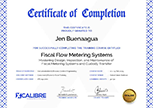
Upon successful completion of this training course, participants will be awarded a Certificate of Completion from XCalibre Training Centre, acknowledging their accomplishment. This certificate serves as a testament to their dedication to developing their skills and advancing their expertise in their respective fields.