

| Date | Venue | Fee | |
|---|---|---|---|
| 07 Dec - 11 Dec 2026 | Dubai – UAE | $ 5,950 | Register Now |
| 14 Dec - 18 Dec 2026 | Dubai – UAE | $ 5,950 | Register Now |
| 19 Apr - 23 Apr 2027 | Dubai - UAE | $ 5,950 | Register Now |
| 28 Jun - 02 Jul 2027 | London - UK | $ 6,950 | Register Now |
About the Course
Organisations across industries are under increasing obligations to measure, manage, and report on their environmental, social, and governance (ESG) performance. Investors are looking more closely at climate risks, regulators require sustainability reporting, customers increasingly expect responsible supply chains, and financiers consider ESG criteria when making financing and investment decisions. These expectations require organisations to translate sustainability requirements into practical actions that protect their reputation, financial performance, and regulatory compliance. Professionals responsible for sustainability therefore need to understand how environmental, social, and governance considerations can be measured, managed, reported, and integrated into organisational strategy and operations. Achieving this requires an understanding of internationally recognised sustainability standards and reporting frameworks, together with the ability to apply them to organisational priorities, performance, and decision-making.
The 5-day Professional Certificate in Sustainability training course provides delegates with the knowledge and practical tools to design and implement a full-cycle corporate sustainability programme. Delegates will work with key standards and frameworks that define current industry practice, including the GHG Protocol for greenhouse gas emissions accounting; ISO 14001, ISO 50001, and ISO 14064; GRI Standards; and ISSB Standards, including IFRS S1 and IFRS S2. Using data, calculations, practical exercises, and case studies from industrial, energy, finance, and service organisations, delegates will apply these requirements in realistic contexts. They will also develop practical tools for immediate application, including a materiality assessment approach, a greenhouse gas inventory covering Scopes 1, 2, and 3, disclosure readiness checklists aligned with GRI and ISSB Standards, and a sustainability roadmap template for their organisations.
Core Objectives
The delegates will achieve the following objectives:
- Apply materiality and double materiality concepts to identify and prioritise sustainability issues relevant to their organisations
- Calculate Scope 1, Scope 2, and Scope 3 greenhouse gas emissions in accordance with GHG Protocol guidelines
- Differentiate the reporting requirements of GRI, ISSB, including IFRS S1 and IFRS S2, SASB, and ESRS
- Analyse climate-related risks and opportunities using scenario analysis methodologies
- Assess social and governance performance using recognised standards and codes of practice
- Prepare ESG reports that address the information needs of investors and other stakeholders
- Validate ESG metrics through appropriate data quality and assurance procedures
- Develop strategic sustainability plans aligned with organisational priorities and implementation requirements
Training Approach
This training course combines technical learning with practical application, with approximately 60% of the programme dedicated to practical exercises and 40% to guided learning. Delegates will undertake calculations, materiality assessments, framework mapping exercises, and case study analysis using real-world corporate data, sustainability reports, and disclosures. Facilitated discussions and practical activities will enable delegates to apply sustainability concepts, reporting frameworks, and assessment techniques to realistic organisational situations while drawing on the actual contexts and challenges of their own organisations. It will progress systematically from sustainability concepts and measurement through to reporting, strategic planning, and implementation. Delegates will also receive practical templates and checklists that can be adapted and applied within their organisations.
The Attendees
This training course is designed for professionals responsible for sustainability strategy, ESG performance, reporting, and related activities across their organisations.
A broad range of professionals will benefit, including but not limited to:
- Sustainability and ESG Managers and Coordinators
- Environmental and HSE Professionals
- Corporate Strategy and Risk Managers
- Finance, Investor Relations, and Reporting Professionals
- Operations and Facilities Managers
- Procurement and Supply Chain Managers
- Compliance and Governance Officers
- Managers and Executives responsible for Corporate Performance
Daily Discussion
DAY ONE: SUSTAINABILITY AND BUSINESS CONTEXT
- Sustainability, ESG, and Corporate Responsibility Concepts
- Triple Bottom Line and the Business Case for Sustainability
- UN Sustainable Development Goals and the 17 SDGs
- Paris Agreement and Global Net-Zero Commitments
- ISO 26000: Guidance on Social Responsibility
- Sustainability Drivers: Regulation, Investors, Customers, and Reputation
- Materiality and Double Materiality Principles
- Stakeholder Identification and Engagement Mapping
DAY TWO: ENVIRONMENTAL MANAGEMENT AND CARBON
- ISO 14001: Environmental Management Systems
- ISO 50001: Energy Management Systems
- GHG Protocol: Scope 1, Scope 2, and Scope 3 Emissions
- ISO 14064: Greenhouse Gas Quantification and Verification
- Activity Data, Emission Factors, and Reporting Boundaries
- Science-Based Targets, Baselines, and Net-Zero Pathways (SBTi)
- Decarbonisation Levers and the Abatement Hierarchy
- Carbon Offsets, Credits, and Residual Emissions
- Water, Waste, Biodiversity, and Circular Economy Principles
DAY THREE: SOCIAL, GOVERNANCE, AND SUSTAINABLE FINANCE
- Labour Rights and Fair Working Conditions
- Health, Safety, and Workforce Wellbeing
- Diversity, Equity, and Inclusion (DEI)
- Community Investment and Human Rights Due Diligence
- Board Oversight and ESG Accountability Structures
- Ethics, Anti-Corruption, and Business Conduct
- Responsible Sourcing and Supplier Codes of Conduct
- Sustainable Finance: Green Bonds and Sustainability-Linked Loans
- ESG Integration in Investment Decisions
DAY FOUR: ESG REPORTING AND DISCLOSURE
- GRI Standards for Multi-Stakeholder Reporting
- ISSB Standards: IFRS S1 and IFRS S2
- SASB Industry Metrics within IFRS S1 and IFRS S2
- ESRS and the EU Corporate Sustainability Reporting Directive (CSRD)
- Climate Disclosure: Governance, Strategy, Risk Management, and Metrics
- Climate Scenario Analysis and Transition Planning
- KPI Selection, Data Quality, and Traceability
- Internal and External Assurance: Limited and Reasonable Assurance
- Avoiding Greenwashing and Misleading Sustainability Claims
DAY FIVE: STRATEGY, IMPLEMENTATION, AND INTEGRATION
- Sustainability Vision, Ambition, and Roadmap Design
- Aligning Sustainability Strategy with Corporate and Sector Goals
- Embedding ESG into Operations and Decision-Making
- Roles, Incentives, and Organisational Culture Change
- Capacity Building Across a Diverse Workforce
- Sustainability Performance Monitoring and Management Review
- ESG Ratings and Performance Benchmarking
- Corporate Sustainability Programme Case Study
- Sustainability Action Plan and Roadmap Development
Certificate Awarded
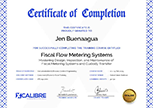
Upon successful completion of this training course, participants will be awarded a Certificate of Completion from XCalibre Training Centre, acknowledging their accomplishment. This certificate serves as a testament to their dedication to developing their skills and advancing their expertise in their respective fields.
Course Enquiry

A XCalibre Professional Development Certification will be given to the delegates upon successful completion of this training course.