
| Date | Venue | Fee | |
|---|---|---|---|
| 19 Oct - 23 Oct 2026 | Dubai – UAE | $ 5,950 | Register Now |
| 02 Aug - 06 Aug 2027 | Dubai – UAE | $ 5,950 | Register Now |
| 18 Oct - 22 Oct 2027 | Dubai – UAE | $ 5,950 | Register Now |
About the Course
Port facilities play a vital role in safeguarding maritime trade, critical infrastructure, personnel, vessels, and cargoes from a wide range of security threats. Effective implementation of port facility security measures is essential to protect operations, support regulatory compliance, and maintain the secure movement of people and goods through maritime facilities. As security risks continue to evolve, organisations require security personnel who can assess threats, manage vulnerabilities, coordinate security activities, and respond effectively to incidents in accordance with international maritime security requirements.
This interactive 5-day Port Facility Security Officer (PFSO) training course provides practical knowledge and operational guidance for personnel responsible for implementing, managing, and maintaining port facility security arrangements. It examines the requirements of SOLAS Chapter XI-2 and the ISPS Code, together with key aspects of port facility security assessments, security planning, access control, restricted areas, ship-port interface activities, incident response, crisis management, and security communications. Delegates will also explore current and emerging maritime security challenges, including terrorism, smuggling, insider threats, and cyber-security risks affecting port operations. Emphasis is placed on risk-based security management, security leadership, regulatory compliance, and continual improvement to support resilient and effective port security operations. Upon completion, delegates will be better equipped to strengthen security performance, support compliance obligations, and contribute to the protection and resilience of port facilities.
Core Objectives
The delegates will achieve the following objectives:
- Explain the purpose and requirements of SOLAS Chapter XI-2 and the ISPS Code
- Interpret the duties and responsibilities of the Port Facility Security Officer
- Conduct and evaluate Port Facility Security Assessments
- Develop and maintain effective Port Facility Security Plans
- Implement security measures appropriate to Security Levels 1, 2, and 3
- Assess maritime security threats, vulnerabilities, and associated risks
- Coordinate responses to security incidents and emergency situations
- Develop improvement initiatives to strengthen port facility security performance and resilience
Training Approach
This training course adopts a highly interactive and application-focused methodology that combines instructor-led presentations, facilitated discussions, operational case studies, group workshops, and realistic port-security scenarios. Delegates will apply practical techniques in security risk assessment, security planning, access control, incident response, and security management to strengthen operational effectiveness, support regulatory compliance, and enhance port facility security performance.
The Attendees
This training course is designed for personnel responsible for managing, supervising, or supporting security operations within port facilities and maritime organisations, including current and prospective Port Facility Security Officers (PFSOs).
A broad range of professionals will benefit, including but not limited to:
- Port Security Managers
- Port Operations Managers
- Terminal Managers and Supervisors
- Port Facility Security Officers (PFSOs)
- Deputy Port Facility Security Officers (DPFSOs)
- Ship Security Officers (SSOs)
- Company Security Officers (CSOs)
- Government Maritime Security Personnel
Daily Discussion
DAY ONE: ISPS FRAMEWORK AND MARITIME SECURITY
- SOLAS Chapter XI-2 Requirements
- Development and Purpose of the ISPS Code
- Maritime Security Threats and Trends
- Roles and Responsibilities of the PFSO
- Security Levels and Associated Measures
- Restricted Areas and Security Zoning Requirements
- Declaration of Security Requirements
- Security Governance and Compliance Responsibilities
DAY TWO: SECURITY ASSESSMENTS AND SHIP INTERFACE
- Port Facility Security Assessment Methodology
- Threat and Vulnerability Assessment
- Security Surveys and Inspections
- Security Equipment, Systems, and Technology
- Ship and Port Interface Operations
- Crew, Visitor, and Contractor Security Management
- Security Records Management and Documentation
- Protection of Sensitive Information
DAY THREE: SECURITY OPERATIONS AND INCIDENT RESPONSE
- Implementation of Port Facility Security Plans
- Personnel Screening and Visitor Management Procedures
- Search Techniques and Screening Operations
- Cargo and Ship Stores Security
- Stowaway Prevention Measures
- Incident Response Procedures
- Security Drills and Exercises
- Emergency Communications and Incident Reporting
- Contingency Planning and Security Preparedness
DAY FOUR: SECURITY LEADERSHIP AND RISK MANAGEMENT
- Security Leadership Principles
- Security Culture and Awareness
- Insider Threat Management
- Security Auditing and Inspections
- Security Risk Management and Mitigation
- Business Continuity Considerations
- Security Performance Monitoring
- Continuous Improvement Strategies
DAY FIVE: SECURITY COORDINATION AND OPERATIONAL EFFECTIVENESS
- Surveillance Systems and Monitoring
- Security Patrol Planning
- Behavioural Observation Techniques
- Security Communications Procedures
- Incident Reporting and Information Sharing
- Security Coordination and Liaison
- Integrated Security Management
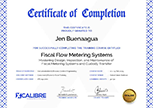
Certificate Awarded
Upon successful completion of this training course, participants will be awarded a Certificate of Completion from XCalibre Training Centre, acknowledging their accomplishment. This certificate serves as a testament to their dedication to developing their skills and advancing their expertise in their respective fields.