
| Date | Venue | Fee | |
|---|---|---|---|
| 21 Dec - 25 Dec 2026 | Dubai – UAE | $ 5,950 | Register Now |
| 21 Jun - 25 Jun 2027 | Dubai – UAE | $ 5,950 | Register Now |
| 06 Sep - 10 Sep 2027 | Dubai – UAE | $ 5,950 | Register Now |
About the Course
Programmable Logic Controllers (PLCs) are the foundation of modern industrial automation, enabling safe, reliable, and efficient control of complex process operations across the oil and gas, petrochemical, power generation, water treatment, pharmaceutical, mining, manufacturing, and utility sectors. As industrial facilities accelerate digital transformation through the Industrial Internet of Things (IIoT), Industrial Ethernet, edge computing, advanced process control, intelligent field devices, and data-driven asset management, automation professionals must possess the technical expertise to design, configure, integrate, troubleshoot, optimise, and modernise PLC-based control systems. Achieving high levels of operational performance requires a comprehensive understanding of process control strategies, instrumentation, industrial communication networks, human-machine interfaces, functional safety, industrial cybersecurity, and lifecycle management within integrated industrial control systems.
This 5-day PLC for Process Control & Automation training course equips delegates with advanced technical knowledge and practical methodologies for implementing and optimising PLC-based process automation systems. Delegates will strengthen their ability to configure PLC hardware, develop structured control logic, integrate field instrumentation and control systems, implement industrial communication networks, conduct Factory Acceptance Testing (FAT) and Site Acceptance Testing (SAT), troubleshoot automation failures, optimise process performance, and improve system reliability throughout the automation lifecycle. It also explores HMI and SCADA integration, distributed control system (DCS) interfaces, Industrial Ethernet, functional safety, industrial cybersecurity, predictive maintenance, redundancy strategies, and PLC system modernisation, enabling organisations to maximise automation performance, operational reliability, and long-term asset sustainability.
Core Objectives
The delegates will achieve the following objectives:
- Analyse PLC architectures and automation system designs used in modern process industries
- Design PLC-based control strategies that improve process safety, reliability, and operational efficiency
- Integrate PLCs with field instrumentation, HMI, SCADA, DCS, and industrial communication networks
- Evaluate industrial communication protocols and automation architectures for process control applications
- Develop advanced PLC programming, testing, commissioning, diagnostics, and troubleshooting techniques
- Optimise PLC performance through predictive maintenance, redundancy strategies, cybersecurity, and lifecycle management
- Lead automation improvement initiatives that enhance operational excellence, system reliability, and digital transformation
Training Approach
This training course combines expert presentations, technical demonstrations, PLC programming workshops, industrial case studies, process control simulations, commissioning exercises, troubleshooting activities, industrial communication network integration and configuration, automation system integration scenarios, collaborative engineering discussions, and guided technical problem-solving sessions. Delegates will apply advanced PLC concepts to realistic industrial process control applications, enabling them to strengthen automation engineering, diagnostics, commissioning, optimisation, lifecycle management, and operational reliability.
The Attendees
This training course is designed for engineers, technical specialists, and automation professionals responsible for designing, operating, maintaining, integrating, commissioning, or optimising PLC-based process control and industrial automation systems.
A broad range of professionals will benefit, including but not limited to:
- Automation Engineers
- Instrumentation Engineers
- Control Systems Engineers
- Electrical Engineers
- Process Control Engineers
- Maintenance Engineers
- Reliability Engineers
- Mechatronics Engineers
- PLC Programmers
- SCADA Engineers
- DCS Engineers
- Commissioning Engineers
- Operations Engineers
- Plant Supervisors
- Technical Specialists
Daily Discussion
DAY ONE: PLC FUNDAMENTALS FOR PROCESS CONTROL
- PLC Architectures and Industrial Automation Systems
- PLC Hardware Components and System Configuration
- PLC Scan Cycles, Memory, and Execution Logic
- Digital and Analogue Input and Output Processing
- Process Instrumentation and PLC Integration
- IEC 61131-3 Programming Standard and PLC Engineering Best Practices
DAY TWO: PLC PROGRAMMING AND CONTROL STRATEGIES
- IEC 61131-3 Programming Languages
- Structured PLC Programming Methodologies
- Timers, Counters, Sequencing, and Function Block Programming
- Process Control Logic Development
- Alarm Management and Interlocking Strategies
- PLC Testing, Factory Acceptance Testing (FAT), Site Acceptance Testing (SAT), and Commissioning
DAY THREE: PROCESS AUTOMATION AND SYSTEM INTEGRATION
- PLC Integration with HMI and SCADA Systems
- PLC Integration with Distributed Control Systems
- Industrial Communication Protocols for PLC Systems
- Industrial Ethernet and Network Architecture
- Process Data Acquisition, Historian, and Data Management
- Advanced Process Control Applications Using PLCs
DAY FOUR: TROUBLESHOOTING, DIAGNOSTICS, AND SYSTEM RELIABILITY
- PLC Hardware and Logic Troubleshooting
- Instrumentation, Field Device, and Network Diagnostics
- Automation System Health Monitoring and Performance Diagnostics
- Cybersecurity for Industrial Control Systems
- Functional Safety and PLC–Safety Instrumented System Interfaces
- Reliability-Centred Maintenance for PLC Systems
DAY FIVE: ADVANCED PLC OPTIMISATION AND LIFECYCLE MANAGEMENT
- PLC Performance Optimisation Techniques
- PLC Redundancy and High-Availability Architectures
- Industrial Internet of Things (IIoT), Edge Computing, and Smart Manufacturing
- Predictive Maintenance Using Automation Data
- Advanced Process Optimisation Using PLC Data
- PLC Lifecycle Management and System Modernisation
Certificate Awarded
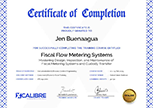
Upon successful completion of this training course, participants will be awarded a Certificate of Completion from XCalibre Training Centre, acknowledging their accomplishment. This certificate serves as a testament to their dedication to developing their skills and advancing their expertise in their respective fields.