
| Date | Venue | Fee | |
|---|---|---|---|
| 19 Oct - 23 Oct 2026 | Dubai – UAE | $ 5,950 | Register Now |
| 26 Oct - 30 Oct 2026 | Dubai – UAE | $ 5,950 | Register Now |
| 12 Jul - 16 Jul 2027 | London - UK | $ 6,950 | Register Now |
| 18 Oct - 22 Oct 2027 | Dubai – UAE | $ 5,950 | Register Now |
| 25 Oct - 29 Oct 2027 | Dubai – UAE | $ 5,950 | Register Now |
About the Course
Industrial and employee relations directly influence workforce stability, operational continuity, organisational risk, productivity, and the relationship between management, employees, and their representatives. Poorly defined employment practices, inconsistent application of workplace rules, ineffective consultation, unresolved grievances, weak disciplinary processes, and adversarial labour-management relations can escalate routine workplace matters into formal disputes, collective action, or prolonged industrial conflict. Effective industrial relations therefore require structured systems for managing employment obligations, employee representation, workplace consultation, grievances, discipline, collective bargaining, dispute resolution, and workplace change. These systems must operate within applicable labour legislation, collective agreements, organisational policies, and relevant International Labour Organisation (ILO) principles and instruments, while maintaining procedural fairness and effective workforce relations.
This interactive 5-day Industrial Relations (IR), Employee Relations (ER) & Trade Union Harmony training course develops the technical capabilities required to manage individual and collective employment relations systematically and consistently. Delegates will examine industrial relations systems, employment rights and obligations, worker representation, trade union structures, consultation mechanisms, grievance and disciplinary procedures, collective agreements, bargaining structures, negotiation processes, industrial disputes, conciliation, mediation, arbitration, and industrial action. It also examines labour-management consultation, workplace investigations, workplace change, restructuring, employee-relations risk, dispute prevention, documentation, governance, and industrial-relations performance indicators. Delegates will apply structured approaches to assess workplace issues, administer employee-relations procedures, prepare for collective bargaining, manage disputes, strengthen consultation, promote constructive management-union relationships, and establish sustainable labour-management relations.
Core Objectives
The delegates will achieve the following objectives:
- Distinguish industrial relations, employee relations, worker representation, and collective labour-relations responsibilities
- Interpret employment obligations, workplace policies, collective agreements, and relevant ILO labour standards and principles
- Administer grievance, disciplinary, consultation, and workplace investigation procedures consistently and fairly
- Prepare collective bargaining positions using workforce data, contractual provisions, operational requirements, and negotiation parameters
- Manage labour disputes through structured negotiation, conciliation, mediation, arbitration, and escalation procedures
- Assess employee-relations risks associated with workplace change, restructuring, industrial action, and emerging workforce issues
- Strengthen labour-management consultation, trade union relations, and industrial-relations governance to support sustainable workplace relations
Training Approach
This training course will combine structured presentations with industrial-relations case studies, collective-agreement analysis, grievance and disciplinary scenarios, workplace-investigation exercises, bargaining simulations, dispute-resolution cases, and workplace-change assessments. Delegates will examine realistic individual and collective employment-relations situations requiring procedural analysis, consultation, bargaining preparation, negotiation, dispute resolution, risk assessment, and evidence-based industrial-relations decision-making.
The Attendees
This training course is designed for professionals responsible for industrial relations, employee relations, labour relations, workforce governance, collective bargaining, workplace investigations, grievance and disciplinary administration, employee representation, or labour-management relations.
A broad range of professionals will benefit, including but not limited to:
- Industrial Relations Managers
- Employee Relations Managers
- Labour Relations Professionals
- Human Resources Managers
- HR Business Partners
- Employee Relations Specialists
- Industrial Relations Officers
- HR Policy and Compliance Professionals
- Collective Bargaining and Negotiation Professionals
- Workforce and People Operations Managers
- Legal and Employment Relations Professionals
- Line and Operations Managers with IR Responsibilities
- Workplace Investigation and Grievance Professionals
- Professionals Responsible for Labour-Management Relations
Daily Discussion
DAY ONE: INDUSTRIAL AND EMPLOYEE RELATIONS SYSTEMS
- IR, ER, and Labour-Management Systems
- Employment Rights, Obligations, and ILO Principles
- Employment Policies and Labour-Relations Frameworks
- Worker Representation, Trade Unions, and Recognition
- Management, Employee, and Representative Responsibilities
- IR and ER Risk Assessment
DAY TWO: EMPLOYEE REPRESENTATION, GRIEVANCES, AND WORKPLACE PROCEDURES
- Employee Voice, Representation, and Consultation
- Workplace Grievances and Resolution Procedures
- Discipline and Procedural Fairness
- Workplace Investigations, Evidence, and Documentation
- Employee Complaints, Escalation, and Case Management
- Recurring ER Issues and Preventive Action
DAY THREE: COLLECTIVE BARGAINING AND LABOUR-MANAGEMENT NEGOTIATION
- Collective Bargaining Structures and Recognition
- Collective Agreements and Administration
- Bargaining Preparation, Data, and Parameters
- Management-Union Relations and Bargaining Positions
- Negotiation, Proposals, and Counterproposals
- Bargaining Outcomes and Agreement Implementation
DAY FOUR: INDUSTRIAL DISPUTES AND CONFLICT RESOLUTION
- Industrial Dispute Causes and Escalation
- Dispute Prevention and Early Intervention
- Labour-Management Negotiation and Resolution
- Conciliation, Mediation, and Arbitration
- Industrial Action, Operational Risk, and Response
- Dispute Settlement and Post-Dispute Stabilisation
DAY FIVE: IR GOVERNANCE, WORKPLACE CHANGE, AND SUSTAINABLE RELATIONS
- Labour-Management Consultation Mechanisms
- Workplace Change, Restructuring, and Consultation
- IR and ER Compliance and Documentation
- IR Metrics, Dispute Trends, and Indicators
- IR Governance and Accountability
- Trade Union Harmony and Sustainable Labour-Management Relations
Certificate Awarded
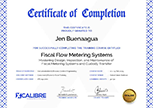
Upon successful completion of this training course, participants will be awarded a Certificate of Completion from XCalibre Training Centre, acknowledging their accomplishment. This certificate serves as a testament to their dedication to developing their skills and advancing their expertise in their respective fields.