| Date | Venue | Fee | |
|---|---|---|---|
| 01 Jun - 05 Jun 2026 | Dubai – UAE | $ 5,950 | Register Now |
| 28 Sep - 02 Oct 2026 | Dubai – UAE | $ 5,950 | Register Now |
| 14 Dec - 18 Dec 2026 | Dubai – UAE | $ 5,950 | Register Now |
About the Course
Modern industrial facilities rely on accurate measurement, stable control loops, and reliable automation architecture to maintain safety, efficiency, and production continuity. As processes become increasingly integrated and digitally connected, instrumentation and control engineers must move beyond basic device knowledge to understand system behaviour, loop performance, communication integrity, and operational reliability, essential for maintaining performance in complex operating environments.
This 5-day Industrial Instrumentation and Modern Automation Systems training course is designed to strengthen delegates’ ability to analyse, optimise, and maintain instrumentation and control systems within modern industrial plants. It integrates smart instrumentation, PID tuning, control valve performance, PLC/DCS architecture, industrial Ethernet communication, alarm management, and lifecycle maintenance into a cohesive operational framework. Emphasis is placed on improving measurement reliability, enhancing loop stability, strengthening system integration, and applying structured fault isolation methods. Delegates will gain practical insight into maintaining automation performance, supporting commissioning activities, and improving long-term system sustainability. Upon completion, they will be better equipped to enhance control system effectiveness, reduce downtime, and support reliable plant operations across a range of industrial sectors.
Core Objectives
The delegates will achieve the following objectives:
- Analyse industrial measurement systems to identify accuracy limitations, drift, and performance deviations
- Apply practical PID tuning techniques to improve control loop stability and response
- Assess control valve and actuator performance to diagnose stiction, hysteresis, and positioning errors
- Interpret PLC and DCS architectures to evaluate signal flow and system integration integrity
- Evaluate alarm management effectiveness and recommend corrective improvements
- Diagnose common automation system faults using structured troubleshooting methodologies
- Implement maintenance and reliability practices that enhance instrumentation performance and system sustainability
Training Approach
This training course is delivered through structured technical facilitation, guided system analysis sessions, and applied workshop discussions aligned with real industrial operating environments. The approach integrates practical diagnostics, control loop evaluation, and performance improvement methodologies to strengthen operational reliability, system integration capability, and disciplined automation governance.
The Attendees
This training course is suitable for technical professionals responsible for maintaining, optimising, and supporting industrial instrumentation and automation systems within operating facilities across process industries such as oil & gas, power generation, water and utilities, manufacturing, and petrochemicals, where reliable measurement, stable control loops, and integrated automation architectures are essential for safe and efficient operations.
A broad range of professionals will benefit, including but not limited to:
- Instrumentation Engineers
- Control Systems Engineers
- Automation Engineers
- Electrical and Instrumentation (E&I) Engineers
- PLC and DCS Engineers
- SCADA Engineers
- Maintenance Engineers and Supervisors
- Reliability Engineers
- Commissioning Engineers
- Plant Operations Engineers
- Technical Supervisors in Process Industries
- Industrial Technicians with control system responsibilities
Daily Discussion
DAY ONE: INDUSTRIAL MEASUREMENT SYSTEMS AND SMART INSTRUMENTATION
- Process Variable Measurement in Industrial Applications
- Pressure, Flow, Level, and Temperature Technologies
- Smart Transmitters and Digital Communication Standards
- Measurement Accuracy, Drift, and Calibration Control
- Instrument Selection Based on Process Conditions
- Measurement Performance Deviation and Field Diagnostics
DAY TWO: CONTROL LOOPS AND FINAL CONTROL PERFORMANCE
- Control Loop Architecture and Signal Flow
- PID Control and Practical Tuning Methods
- Control Valve Operation and Actuator Performance
- Loop Stability, Oscillation, and Performance Assessment
- Valve Stiction and Final Control Element Issues
- Loop Performance Optimisation and Benchmarking
DAY THREE: PLC, DCS, AND INDUSTRIAL AUTOMATION ARCHITECTURE
- PLC and DCS Functional Architecture
- I/O Modules and Signal Integrity
- HMI and SCADA Integration Principles
- Industrial Ethernet and Communication Protocols
- Fieldbus and Digital Device Integration
- System Integration and Interoperability Challenges
DAY FOUR: CONTROL STRATEGIES AND OPERATIONAL OPTIMISATION
- Cascade, Ratio, and Feedforward Control Applications
- Alarm Management in Line with ISA-18.2 Principles
- Process Data Monitoring and Performance Indicators
- Automation System Fault Isolation Techniques
- Control Strategy Improvement in Operating Plants
- Basic Cybersecurity Awareness for Control Systems
DAY FIVE: RELIABILITY, MAINTENANCE, AND LIFECYCLE MANAGEMENT
- Preventive and Predictive Maintenance Practices
- Loop Checking and Structured Commissioning
- Reliability of Instrumentation and Automation Assets
- Root Cause Analysis for Control and Instrument Failures
- Change Management in Automation Systems
- Automation System Lifecycle and Modernisation Planning
Certificate Awarded
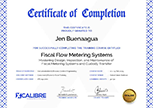
Upon successful completion of this training course, participants will be awarded a Certificate of Completion from XCalibre Training Centre, acknowledging their accomplishment. This certificate serves as a testament to their dedication to developing their skills and advancing their expertise in their respective fields.