
| Date | Venue | Fee | |
|---|---|---|---|
| 18 May - 22 May 2026 | Dubai – UAE | $ 5,950 | Register Now |
| 07 Sep - 11 Sep 2026 | Dubai – UAE | $ 5,950 | Register Now |
| 21 Dec - 25 Dec 2026 | Dubai – UAE | $ 5,950 | Register Now |
About the Course
Water pumping systems account for a significant proportion of industrial and municipal energy consumption, particularly within water utilities, oil and gas facilities, district cooling networks, desalination plants, and process industries. Inefficient control strategies, oversized pumps, improper throttling, inadequate variable speed drive configuration, and poor system curve alignment can result in excessive energy usage, mechanical stress, premature equipment failure, and increased operational expenditure. As energy costs rise and sustainability targets become more stringent, engineers and plant operators must adopt structured and technically sound control strategies that optimise hydraulic performance while minimising total lifecycle energy consumption.
This 5-day Energy-Efficient Control Strategies for Water Pumping Systems training course provides a practical and engineering-focused framework for analysing, optimising, and managing pumping system performance. It integrates pump hydraulics, system curve analysis, variable speed control, demand-based operation, instrumentation feedback, parallel pump sequencing, and energy auditing methodologies into a cohesive optimisation approach. Emphasis is placed on reducing energy consumption, improving system stability, enhancing reliability, and aligning control strategies with operational demand profiles. Delegates will strengthen their capability to diagnose inefficiencies, redesign control logic, implement variable frequency drive optimisation, and apply structured performance monitoring techniques to sustain long-term energy savings and operational resilience.
Core Objectives
The delegates will achieve the following objectives:
- Analyse pump and system curves to identify hydraulic inefficiencies and energy losses
- Evaluate control strategies, including throttling, on/off cycling, and variable speed operation
- Optimise variable frequency drive (VFD) configuration for demand-based energy efficiency
- Assess parallel pump sequencing and load sharing strategies
- Diagnose cavitation, recirculation, and flow instability affecting energy performance
- Implement energy auditing methodologies for pumping systems
- Formulate control optimisation plans that reduce lifecycle energy consumption and improve system reliability
Training Approach
This training course is delivered through structured technical facilitation, hydraulic performance analysis workshops, applied control evaluation exercises, and real-system case discussions aligned with municipal and industrial water pumping environments. Delegates engage in system curve interpretation, VFD tuning discussions, and energy reduction modelling to strengthen analytical decision-making and operational optimisation capability.
The Attendees
This training course is suitable for engineering and technical professionals responsible for the design, operation, optimisation, and maintenance of water pumping systems within utilities and industrial facilities.
A broad range of professionals will benefit, including but not limited to:
- Mechanical Engineers
- Electrical Engineers
- Instrumentation and Control Engineers
- Water Utility Engineers
- Maintenance and Reliability Engineers
- Energy Managers
- Process Engineers
- Plant Operations Supervisors
- Commissioning Engineers
- Asset Integrity and Performance Engineers
Daily Discussion
DAY ONE: PUMP HYDRAULICS AND SYSTEM ENERGY FUNDAMENTALS
- Pump Types and Operating Principles
- System Curve and Pump Curve Interaction
- Best Efficiency Point (BEP) and Operating Envelope
- Hydraulic Losses and Friction Head
- Energy Consumption Drivers in Pumping Systems
- Cavitation and Hydraulic Instability
DAY TWO: CONTROL STRATEGIES AND VARIABLE SPEED OPTIMISATION
- Traditional Control Methods (Throttling and Bypass)
- On/Off and Pressure Switch Control Limitations
- Variable Frequency Drive (VFD) Fundamentals
- Affinity Laws and Speed Control Impact
- Demand-Based Pressure and Flow Control
- Energy Impact Comparison: Fixed Speed vs Variable Speed
DAY THREE: PARALLEL PUMP OPERATION AND SYSTEM STABILITY
- Pump Sequencing and Load Sharing Strategies
- Lead-Lag Control Methods
- Pressure Zone Management
- Transient Analysis and Water Hammer Considerations
- Flow Oscillation and Control Loop Stability
- Optimising Multi-Pump Energy Performance
DAY FOUR: INSTRUMENTATION, MONITORING, AND ENERGY AUDITING
- Flow, Pressure, and Power Measurement Accuracy
- Real-Time Energy Monitoring
- Pump Efficiency Testing and Field Assessment
- Specific Energy Consumption (kWh/m³) Calculation
- Energy Audit Methodology for Pumping Systems
- Performance Benchmarking and KPI Development
DAY FIVE: OPTIMISATION, RELIABILITY, AND LIFECYCLE STRATEGY
- Root Cause Analysis of Energy Inefficiency
- Maintenance Impact on Pump Efficiency
- Impeller Trimming and System Redesign
- Control Logic Improvement and Setpoint Optimisation
- Lifecycle Cost Analysis
- Developing a Pumping System Energy Improvement Plan
Certificate Awarded
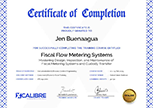
Upon successful completion of this training course, participants will be awarded a Certificate of Completion from XCalibre Training Centre, acknowledging their accomplishment. This certificate serves as a testament to their dedication to developing their skills and advancing their expertise in their respective fields.