
| Date | Venue | Fee | |
|---|---|---|---|
| 22 Jun - 26 Jun 2026 | Dubai – UAE | $ 5,950 | Register Now |
| 31 Aug - 04 Sep 2026 | London - UK | $ 5,950 | Register Now |
| 30 Nov - 04 Dec 2026 | Dubai – UAE | $ 5,950 | Register Now |
About the Course
Water distribution control rooms operate within dynamic hydraulic environments where pressure stability, demand variability, pump sequencing, and valve coordination must be continuously managed to sustain reliable service delivery. Increasing operational complexity, driven by intermittent supply conditions, ageing infrastructure behaviour, non-revenue water escalation, energy optimisation pressures, alarm overload, automation vulnerability, and cybersecurity exposure, demands disciplined technical judgement and structured response execution. In this environment, disturbances such as burst mains, pressure collapse, contamination threats, pump trip events, or power loss can escalate rapidly if system behaviour is not correctly interpreted and stabilised.
This 5-day Control Room Operations & Emergency Response for Water Distribution training course strengthens the capability required to manage real-time hydraulic disturbances with analytical precision and operational control. It integrates advanced SCADA interpretation, anomaly recognition, surge awareness, isolation sequencing, emergency pump energy management, and structured system recovery under both normal and reduced staffing conditions. Delegates will examine cascading failure pathways, evaluate containment and restoration options, and coordinate corrective actions that minimise secondary damage and NRW impact. Emphasis is placed on strengthening situational awareness, prioritisation discipline, and predictive monitoring strategies to enhance resilience and ensure stable network performance during routine operations and high-risk emergency events.
Core Objectives
The delegates will achieve the following objectives:
- Analyse multi-parameter SCADA data to detect hydraulic instability and emerging disturbance patterns
- Differentiate operational variability from abnormal system behaviour under intermittent supply and ageing infrastructure conditions
- Evaluate surge, pressure collapse, and cascading failure risks during burst, pump trip, or power-loss events
- Design structured isolation and containment sequences that preserve critical supply zones
- Optimise emergency pump operation to balance hydraulic recovery requirements with energy constraints
- Formulate coordinated restoration strategies under reduced staffing and automation disruption scenarios.
- Assess cybersecurity, automation, and predictive monitoring vulnerabilities affecting control room performance and system resilience
Training Approach
This training course is delivered through structured technical briefings, advanced SCADA trend diagnostics, cascading failure scenario analysis, guided isolation sequencing workshops, and facilitated emergency simulations based on realistic utility operating constraints. Delegates engage in data-driven disturbance mapping, power-loss response modelling, reduced-resource prioritisation exercises, and predictive risk identification tasks. The approach reinforces analytical decision-making, disciplined sequencing of corrective actions, and coordinated control room–field execution to stabilise hydraulic performance under both routine and high-consequence conditions.
The Attendees
This training course is designed for technical and operational personnel responsible for real-time monitoring, hydraulic control, disturbance response, and system recovery within water distribution networks.
A broad range of professionals will benefit, including but not limited to:
- Control Room Operators
- Senior Control Room Operators
- Water Distribution Operations Engineers
- SCADA and Automation Engineers
- Network Control Supervisors
- Pump Station Supervisors
- Emergency Response Coordinators
- Leakage and Non-Revenue Water (NRW) Engineers
- Asset Reliability and Maintenance Engineers
- Operations Managers within Water Utilities
Daily Discussion
DAY ONE: REAL-TIME NETWORK MONITORING AND HYDRAULIC STATE CONTROL
- SCADA Multi-Parameter Interpretation under Variable Demand
- Pressure Zone Stability and Critical Node Monitoring
- Alarm Flood Management and Response Prioritisation under High-Load Conditions
- Early Detection of Hydraulic Anomalies in Ageing Infrastructure
- Pump Load Behaviour, Energy Trends, and Efficiency Indicators
- Data Integrity Validation during Communication Latency
DAY TWO: DISTURBANCE DETECTION AND INTERMITTENT SUPPLY CHALLENGES
- Pressure Collapse Analysis and Root Cause Identification
- Hydraulic Behaviour under Intermittent Supply Conditions
- Flow Redistribution during Localised and System-Wide Interruption
- NRW Escalation under Pressure Fluctuation
- Reservoir Depletion Risk and Demand Surge Scenarios
- Automation Override and Manual Control during System Failure
DAY THREE: BURST RESPONSE, ISOLATION ENGINEERING, AND ENERGY CONTROL
- Hydraulic Impact of Sudden Pipe Rupture in Branched Networks
- Structured Valve Isolation Sequencing under Live Pressure
- Pump Reconfiguration during Network Segmentation
- Emergency Pump Operation under Energy Load Constraints
- Temporary Supply Re-Routing to Critical Infrastructure Zones
- Controlled Repressurisation to Prevent Secondary Surge
DAY FOUR: SURGE, CONTAMINATION, AND CONTROL SYSTEM DISRUPTION
- Pressure Wave Propagation and Cascading Failure Risk
- Surge Amplification during Rapid Valve and Pump Events
- Backflow and Negative Pressure Zone Formation
- Containment Strategy during Suspected Contamination
- SCADA Cybersecurity Disruption and Command Integrity Loss
- Emergency Power Failure and Generator Coordination
DAY FIVE: SYSTEM RECOVERY, RESILIENCE, AND PERFORMANCE STRENGTHENING
- Coordinated Restoration under Reduced Staffing Conditions
- Pressure Normalisation across Interconnected Zones
- Pump and Valve Synchronisation during Network Restart
- Post-Incident Hydraulic and Energy Performance Evaluation
- NRW Control through Targeted Pressure Adjustment
- Predictive Monitoring and Preventive Risk Reduction Strategy
Certificate Awarded
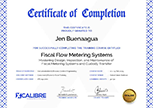
Upon successful completion of this training course, participants will be awarded a Certificate of Completion from XCalibre Training Centre, acknowledging their accomplishment. This certificate serves as a testament to their dedication to developing their skills and advancing their expertise in their respective fields.