
| Date | Venue | Fee | |
|---|---|---|---|
| 04 May - 08 May 2026 | Dubai – UAE | $ 5,950 | Register Now |
| 22 Jun - 26 Jun 2026 | Istanbul - Turkey | $ 5,950 | Register Now |
| 03 Aug - 07 Aug 2026 | Dubai – UAE | $ 5,950 | Register Now |
| 10 Aug - 14 Aug 2026 | London - UK | $ 5,950 | Register Now |
| 31 Aug - 04 Sep 2026 | Dubai – UAE | $ 5,950 | Register Now |
| 21 Sep - 25 Sep 2026 | London - UK | $ 5,950 | Register Now |
| 19 Oct - 23 Oct 2026 | Lisbon - Portugal | $ 5,950 | Register Now |
| 30 Nov - 04 Dec 2026 | Dubai – UAE | $ 5,950 | Register Now |
About the Course
The upstream petroleum sector operates in a demanding financial and contractual environment, where volatile commodity prices, long project life cycles, and capital-intensive investments are subject to close regulatory and partner scrutiny. Accounting decisions taken during the exploration, development, and production phases often have consequences that extend well beyond routine financial reporting. In practice, finance professionals must regularly exercise professional judgment when interpreting accounting standards, defining accounting policies, and addressing uncertainty around asset valuation, cost recovery, revenue entitlement, and government participation. These decisions frequently become focal points during audits, partner reviews, and regulatory assessments.
This 5-day Upstream Petroleum Accounting training course is designed to strengthen delegates’ ability to apply petroleum accounting principles in real operational and reporting environments. It addresses the practical challenges faced by finance teams, joint venture accountants, internal auditors, and financial controllers who must reconcile technical accounting requirements with commercial realities and audit expectations. Delegates will explore how accounting judgment influences financial statements, partner relationships, cost recovery positions, and regulatory exposure. Particular emphasis is placed on connecting accounting treatment with operational decisions, contractual obligations, and risk management considerations. Upon completion, delegates will be better positioned to support informed decision-making, reinforce internal controls, and enhance confidence in upstream financial reporting across complex oil & gas operations.
Core Objectives
By the end of the training course, delegates will be able to:
- Analyse upstream petroleum accounting challenges arising from exploration, development, and production activities
- Evaluate accounting policy choices applicable to upstream oil and gas operations under relevant IFRS requirements
- Apply appropriate accounting treatment for exploration, development, and production costs within joint venture and PSC environments
- Assess the financial impact of production entitlements, imbalances, royalties, and government take on upstream revenue reporting
- Examine cost recovery mechanisms and accounting implications under production sharing arrangements
- Interpret upstream financial statements with reference to asset valuation, DD&A, and impairment considerations
- Identify key accounting risks, internal control gaps, and audit exposure within upstream petroleum operations
Training Approach
The training course combines expert-led instruction with guided discussion and practical analysis, allowing delegates to relate technical accounting requirements to real upstream operating scenarios. Structured exercises and scenario-based reviews are used to link accounting judgment with commercial, contractual, and audit considerations commonly encountered in upstream oil & gas operations.
The Attendees
This training course is intended for finance and assurance professionals involved in upstream oil and gas activities who require a solid understanding of petroleum accounting within complex contractual and regulatory settings.
It will be valuable to the professionals, but not limited to the following:
- Finance Managers
- Financial Controllers
- Upstream Petroleum Accountants
- Joint Venture and Cost Recovery Accountants
- Internal Auditors and Assurance Professionals
- External Auditors assigned to Oil & Gas Portfolios
- Commercial and Contract Finance Specialists
- Planning, Budgeting, and Reporting Analysts
- Government and Regulatory Finance Representatives
Daily Discussion
DAY ONE: UPSTREAM PETROLEUM ACCOUNTING ENVIRONMENT AND POLICY JUDGMENT
- Overview of the Upstream Accounting Framework
- Accounting Policy Selection in E&P
- Successful Efforts vs Full Cost – Areas of Judgment
- Upstream Accounting under IFRS 6 Requirements
- Field, Block, and Asset Boundary Determination
- Capital Cost Classification Risk under IAS 16
DAY TWO: EXPLORATION AND DEVELOPMENT COST ACCOUNTING COMPLEXITY
- Exploration Cost Capitalisation Judgment under IFRS 6
- OpEx, CapEx, and Development Costs
- Appraisal Phase Cost Treatment Decisions
- Development Well Cost Allocation Methods under IAS 16
- Asset Retirement Obligation Estimation Uncertainty under IAS 37
- Decommissioning Provision Reassessment Impact
- Impairment Indicators for Upstream Assets under IAS 36
DAY THREE: PRODUCTION ACCOUNTING AND REVENUE COMPLEXITY
- Entitlement vs Equity Production Concepts
- Production Imbalance Risk and Correction Methods
- Crude Oil & Gas – Official Seling Price
- Provisional Pricing and True-Up Adjustments under IFRS 15
- Royalties, Taxes, and Government Take Accounting
- Worked Example of Royalties, Taxes, and Government Share Allocation
- Inventory Measurement under IAS 2 (Year End Stock Take)
DAY FOUR: JOINT VENTURE AND PSC ACCOUNTING
- Joint Operating Agreement Accounting Obligations
- Cash Call Structure and Approval Risk
- Non-operator Accounting Oversight Duties
- Cost Recovery Limits under PSC Frameworks
- Cost Oil and Profit Oil Allocation Mechanisms
- Joint Arrangement Accounting under IFRS 11
DAY FIVE: FINANCIAL REPORTING, AUDIT, AND UPSTREAM ACCOUNTING RISK
- DD&A Calculation Drivers and Reserves Linkage
- Internal Control Design for Upstream Operations
- Internal Audit Focus Areas in E&P Accounting
- External Audit Expectations under ISA standards
- Common Upstream Accounting Misstatements
- Financial Statement Disclosure Risks in Upstream Operations
Certificate Awarded
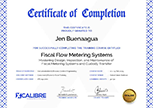
Upon successful completion of this training course, participants will be awarded a Certificate of Completion from XCalibre Training Centre, acknowledging their accomplishment. This certificate serves as a testament to their dedication to developing their skills and advancing their expertise in their respective fields.