
| Date | Venue | Fee | |
|---|---|---|---|
| 21 Sep - 25 Sep 2026 | Copenhagen - Denmark | $ 5,950 | Register Now |
| 02 Nov - 06 Nov 2026 | Dubai – UAE | $ 5,950 | Register Now |
About the Course
Traffic incidents create significant disruption across transport networks, affecting road safety, travel time reliability, and emergency response effectiveness. Increasing traffic density, urbanisation, and complex road systems require structured and coordinated approaches to manage incidents efficiently. Delays in detection, response, and clearance can escalate congestion, increase secondary crashes, and reduce operational performance across transport corridors. Authorities and organisations must apply integrated response strategies supported by real-time data, communication systems, and coordinated field operations. In many environments, fragmented response processes, limited coordination, and inconsistent procedures contribute to extended incident duration, increased operational risk, and reduced network performance.
This 5-day Traffic Incident Management (TIM) Best Practices training course provides a structured approach to managing traffic incidents across the full incident lifecycle. It integrates practical methods in incident detection, response coordination, traffic control, and clearance operations aligned with organisational and multi-agency requirements. Emphasis is placed on operational planning, communication protocols, resource deployment, and safety management during incidents. Delegates will enhance their ability to manage incident response, coordinate stakeholders, and minimise disruption to traffic flow. It equips delegates with structured frameworks and practical tools to improve response efficiency, enhance safety, and restore normal traffic operations within reduced timeframes.
Core Objectives
By the end of the training course, delegates will be able to:
- Interpret traffic incident data and response performance metrics
- Assess incident types, severity, and operational impact
- Apply structured incident response and coordination procedures
- Evaluate traffic control measures during incidents
- Implement safe and efficient incident clearance practices
- Coordinate multi-agency response and communication
- Analyse causes of delays and secondary crashes
- Improve incident response time and traffic flow recovery
Training Approach
This training course adopts a structured and application-focused approach, integrating scenario-based simulations, incident response exercises, and coordination drills to reinforce learning outcomes. Delegates will apply practical frameworks to manage incidents, coordinate resources, and improve response effectiveness.
The Attendees
This training course is designed for professionals involved in traffic operations, incident response, and transport management.
A broad range of professionals will benefit, including but not limited to:
- Traffic Engineers
- Transport Engineers
- Road Safety Officers
- Traffic Management Officers
- Incident Response Teams and Supervisors
- Emergency Services Coordinators
- Law Enforcement and Traffic Control Officers
- Transport Authority and Municipal Staff
- Fleet and Operations Managers
- Infrastructure and Highway Operations Personnel
Daily Discussion
DAY ONE: INCIDENT DETECTION AND SITUATION ASSESSMENT
- Traffic Incident Management Principles and Lifecycle
- Incident Types and Severity Classification
- Incident Detection Systems and Technologies
- Data Collection and Incident Reporting Methods
- Incident Impact Assessment on Traffic Flow
- Identification of High-Risk Locations and Patterns
DAY TWO: INCIDENT RESPONSE AND COMMAND COORDINATION
- Incident Response Procedures and Activation Protocols
- Roles and Responsibilities in Incident Response
- Multi-Agency Coordination and Communication Protocols
- Communication Delays Between Response Agencies
- Resource Deployment and Response Prioritisation
- Incident Command and Control Structures
DAY THREE: TRAFFIC CONTROL AND SAFETY DURING INCIDENTS
- Traffic Diversion and Lane Control Strategies
- Traffic Control Devices and Signage Deployment
- Congestion Management During Incident Conditions
- Scene Protection and Safety Zone Establishment
- Secondary Crash Risk During Incident Response
- Protection of Responders and Road Users
DAY FOUR: INCIDENT CLEARANCE AND TRAFFIC RECOVERY
- Incident Clearance Strategies and Time Reduction Methods
- Vehicle Recovery and Debris Removal Operations
- Coordination with Towing and Recovery Services
- Traffic Flow Restoration and Network Recovery
- Minimising Incident Duration and Network Impact
- Post-Clearance Safety Verification and Reopening
DAY FIVE: INCIDENT PERFORMANCE MONITORING AND OPERATIONAL CONTROL
- Incident Performance Metrics and Indicators
- Response Time and Clearance Performance Monitoring
- Response Delays and Bottleneck Identification
- Coordination and Communication Performance Evaluation
- Incident Review and Response Performance Evaluation
- Accountability and Reporting Control Measures
Certificate Awarded
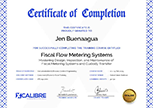
Upon successful completion of this training course, participants will be awarded a Certificate of Completion from XCalibre Training Centre, acknowledging their accomplishment. This certificate serves as a testament to their dedication to developing their skills and advancing their expertise in their respective fields.