
| Date | Venue | Fee | |
|---|---|---|---|
| 07 Sep - 11 Sep 2026 | Kigali - Rwanda | $ 5,950 | Register Now |
| 05 Oct - 09 Oct 2026 | Kuala Lumpur - Malaysia | $ 5,950 | Register Now |
| 09 Nov - 13 Nov 2026 | Kigali - Rwanda | $ 5,950 | Register Now |
| 30 Nov - 04 Dec 2026 | Dubai – UAE | $ 5,950 | Register Now |
| 28 Dec - 01 Jan 2027 | London - UK | $ 5,950 | Register Now |
| 22 Mar - 26 Mar 2027 | Dubai – UAE | $ 5,950 | Register Now |
| 31 May - 04 Jun 2027 | London - UK | $ 6,950 | Register Now |
| 02 Aug - 06 Aug 2027 | Dubai – UAE | $ 5,950 | Register Now |
| 06 Sep - 10 Sep 2027 | Kigali - Rwanda | $ 6,950 | Register Now |
| 04 Oct - 08 Oct 2027 | Kuala Lumpur - Malaysia | $ 6,950 | Register Now |
| 08 Nov - 12 Nov 2027 | Kigali - Rwanda | $ 6,950 | Register Now |
| 29 Nov - 03 Dec 2027 | Dubai – UAE | $ 5,950 | Register Now |
| 27 Dec - 31 Dec 2027 | London - UK | $ 6,950 | Register Now |
About the Course
Hydrocarbon storage and terminal facilities serve as critical control points within the energy value chain, where operational efficiency, product integrity, and measurement accuracy directly influence revenue, safety, and supply reliability. These operations involve the handling, storage, and transfer of large hydrocarbon volumes under complex conditions, where failures in control, integrity, or coordination can result in product loss, environmental exposure, and operational disruption. Increasing regulatory expectations, ageing infrastructure, and the need for accurate custody transfer have intensified the demand for disciplined and integrated management approaches. As operational complexity grows, organisations must ensure alignment between asset integrity, measurement systems, and logistics performance to sustain reliability and compliance.
This 5-day Oil & Gas Storage, Terminals, and Distribution Management training course provides a structured and practical approach to managing storage systems, terminal operations, and distribution networks. It integrates operational control, API-aligned integrity practices, and custody transfer systems to strengthen performance across the value chain. Emphasis is placed on tank operations, measurement accuracy, loss control, and distribution efficiency to support reliable and cost-effective operations. Delegates will strengthen their capability to oversee terminal activities, maintain storage asset integrity, and manage distribution processes under varying operational conditions, while supporting performance monitoring, risk control, and ongoing operational performance improvement.
Core Objectives
By the end of the training course, delegates will be able to:
- Outline storage and terminal operational frameworks across the value chain
- Execute tank management and product handling processes
- Analyse inventory accuracy and loss control performance
- Prioritise distribution and logistics strategies
- Design operational improvement plans for terminal efficiency
- Benchmark performance across storage and distribution systems
- Validate operational resilience under disruption scenarios
Training Approach
This training course adopts a practical, operations-driven approach through facilitated discussions, real-world terminal scenarios, performance analysis, and applied problem-solving aligned with storage and distribution environments. The delegates will engage in operational reviews and decision-focused exercises to strengthen control, efficiency, and performance.
The Attendees
This training course is suitable for professionals responsible for storage, terminal operations, logistics, and distribution management within the oil & gas industry.
A broad range of professionals will benefit, including but not limited to:
- Terminal Managers and Supervisors
- Storage Operations Engineers
- Logistics and Distribution Managers
- Supply Chain and Planning Professionals
- Maintenance and Asset Integrity Engineers
- HSE and Compliance Personnel
- Oil & Gas Operations Managers
Daily Discussion
DAY ONE: STORAGE AND TERMINAL OPERATIONS OVERVIEW
- Storage Systems and Terminal Configurations
- Tank Types and Operational Applications
- Terminal Process Flow and Operations
- Product Properties and Handling Requirements
- Operational Risks in Storage Facilities
- Regulatory and Safety Requirements
DAY TWO: TANK OPERATIONS, INTEGRITY, AND API STANDARDS
- Tank Operations and Process Control
- Inspection and Maintenance Practices
- API 650 and API 653 Standards Overview
- Corrosion Control and Integrity Management
- Overfill Protection and Safety Systems
- Leak Detection and Containment
DAY THREE: INVENTORY MANAGEMENT, CUSTODY TRANSFER, AND LOSS CONTROL
- Inventory Measurement and Reconciliation
- Tank Gauging Systems and Calibration
- Custody Transfer Systems and API MPMS Framework
- Loss Control and Hydrocarbon Accounting
- Measurement Accuracy and Uncertainty
- Performance Monitoring and Reporting
DAY FOUR: DISTRIBUTION, LOGISTICS, AND SUPPLY OPTIMISATION
- Distribution Network Planning and Design
- Transportation Modes (Pipeline, Marine, Road, Rail)
- Scheduling and Dispatch Optimisation
- Supply Coordination and Demand Planning
- Operational Constraints and Bottlenecks
- Distribution Cost Optimisation
DAY FIVE: RISK MANAGEMENT, SAFETY, AND PERFORMANCE OPTIMISATION
- Operational Risk Identification and Control
- Emergency Response and Incident Management
- Safety Systems in Terminal Operations
- Performance Monitoring and KPI Optimisation
- Efficiency Improvement and Throughput Optimisation
- Environmental Compliance and Sustainability Control
Certificate Awarded
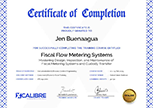
Upon successful completion of this training course, participants will be awarded a Certificate of Completion from XCalibre Training Centre, acknowledging their accomplishment. This certificate serves as a testament to their dedication to developing their skills and advancing their expertise in their respective fields.