
| Date | Venue | Fee | |
|---|---|---|---|
| 09 Nov - 13 Nov 2026 | Dubai – UAE | $ 5,950 | Register Now |
| 05 Apr - 09 Apr 2027 | Dubai – UAE | $ 5,950 | Register Now |
| 31 May - 04 Jun 2027 | Cape Town - South Africa | $ 6,950 | Register Now |
About the Course
Environmental management has become increasingly complex as organisations operate across jurisdictions with differing regulatory requirements, environmental sensitivities, resource constraints, stakeholder expectations, and exposure to climate-related risks. Effective environmental management requires organisations to understand how their activities, products, services, and value chains interact with air, water, land, ecosystems, natural resources, and surrounding communities. Environmental professionals must therefore move beyond compliance monitoring to systematically identify significant environmental aspects, evaluate environmental risks and opportunities, control pollution, manage resources, strengthen operational controls, and measure environmental performance across diverse operating environments. A structured global approach enables organisations to maintain consistent environmental controls while responding appropriately to different regulatory, operational, and geographical conditions.
This 5-day Global Environmental Management training course develops the technical and managerial capabilities required to manage environmental responsibilities across international operations and organisational boundaries. It examines environmental management systems, aspect and impact evaluation, regulatory compliance, pollution prevention, resource efficiency, waste and emissions management, life-cycle considerations, climate risk, biodiversity, environmental performance evaluation, and management assurance. Delegates will evaluate environmental risks, determine appropriate operational controls, interpret performance indicators, and prioritise improvement actions across different organisational and geographical contexts. It also examines internationally recognised environmental frameworks and emerging environmental priorities to support consistent, risk-based, and measurable environmental management across global operations.
Core Objectives
The delegates will achieve the following objectives:
- Interpret global environmental management requirements, principles, and organisational responsibilities
- Evaluate environmental aspects and impacts using significance and risk-based criteria
- Develop environmental controls that address compliance obligations, pollution, resources, and operational risks
- Integrate life-cycle and value-chain considerations into environmental management decisions
- Assess climate-related and biodiversity risks affecting organisational activities and environmental performance
- Analyse environmental performance using indicators, monitoring data, and management-system evidence
- Formulate environmental improvement priorities that strengthen compliance, resilience, and environmental performance
Training Approach
This training course will combine structured presentations with environmental risk assessments, environmental aspect and impact evaluation exercises, international case studies, performance-analysis activities, and facilitated discussions. Delegates will examine environmental obligations, operational activities, environmental data, pollution controls, resource use, climate risks, and performance indicators to evaluate environmental significance and control effectiveness. The approach will emphasise practical analysis, professional judgement, international applicability, and evidence-based environmental management decisions.
The Attendees
This training course is suitable for professionals responsible for managing, assessing, monitoring, or improving environmental performance across organisations, projects, facilities, and international operations.
A broad range of professionals will benefit, including but not limited to:
- Environmental Managers and Specialists
- Environmental Engineers
- Environmental Management System Professionals
- HSE and EHS Managers
- Sustainability Professionals
- Environmental Compliance Professionals
- Environmental Auditors
- Operations and Facility Managers
- Project and Engineering Professionals
- Environmental Risk Professionals
- Corporate Sustainability and ESG Professionals
- Environmental Performance Analysts
Daily Discussion
DAY ONE: GLOBAL ENVIRONMENTAL MANAGEMENT AND RISK
- Global Environmental Management Context
- Environmental Management Systems (ISO 14001:2026)
- Environmental Aspects and Impacts
- Environmental Significance Evaluation
- Environmental Risks and Opportunities
- Compliance Obligations and Governance
DAY TWO: POLLUTION CONTROL AND RESOURCE MANAGEMENT
- Air Emissions Management
- Water Use and Discharge Control
- Waste and Hazardous Materials Management
- Soil and Groundwater Protection
- Resource Efficiency and Circularity
- Pollution Prevention Controls
DAY THREE: LIFE-CYCLE AND VALUE-CHAIN ENVIRONMENTAL MANAGEMENT
- Life-Cycle Environmental Considerations
- Upstream and Downstream Environmental Impacts
- Environmental Criteria in Procurement
- Contractor and Outsourced Activity Controls
- Product and Service Environmental Impacts
- Value-Chain Environmental Performance
DAY FOUR: CLIMATE, BIODIVERSITY AND ENVIRONMENTAL RESILIENCE
- Climate-Related Environmental Risk
- Greenhouse Gas Mitigation Priorities
- Climate Adaptation and Resilience
- Biodiversity and Ecosystem Risk
- Natural Resource Dependency
- Environmental Resilience Planning
DAY FIVE: ENVIRONMENTAL PERFORMANCE AND IMPROVEMENT
- Environmental Performance Evaluation (ISO 14031)
- Environmental Performance Indicators
- Environmental Monitoring and Data Analysis
- Environmental Compliance Performance
- Environmental Trend and Variance Analysis
- Environmental Improvement Prioritisation
Certificate Awarded
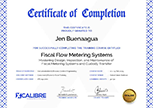
Upon successful completion of this training course, participants will be awarded a Certificate of Completion from XCalibre Training Centre, acknowledging their accomplishment. This certificate serves as a testament to their dedication to developing their skills and advancing their expertise in their respective fields.