
| Date | Venue | Fee | |
|---|---|---|---|
| 22 Jun - 26 Jun 2026 | Dubai – UAE | $ 5,950 | Register Now |
| 30 Nov - 04 Dec 2026 | Dubai – UAE | $ 5,950 | Register Now |
About the Course
Organisations across sectors face increasing exposure to complex and high-impact risks, including climate-related disasters, industrial incidents, cyber disruptions, and geopolitical instability. These evolving risk conditions require organisations to strengthen resilience, enhance preparedness, and ensure rapid, coordinated response capabilities. Disaster Management and Emergency Preparedness (DMEP) have therefore become critical organisational priorities, enabling continuity of operations, protection of assets, and safeguarding of personnel. Without structured preparedness and response systems, organisations risk operational disruption, financial loss, reputational damage, and threats to employee safety.
This 5-day Disaster Management & Emergency Preparedness training course equips delegates with structured frameworks, tools, and methodologies aligned with internationally recognised practices in risk, resilience, and emergency response management. Delegates examine hazard identification methods, emergency preparedness frameworks, incident command structures, and crisis communication strategies applied in complex operational environments. Furthermore, it addresses business continuity integration, digital early warning systems, and coordinated multi-agency response mechanisms. Emphasis is placed on practical application through structured simulations and scenario-based exercises, enabling participants to strengthen organisational readiness, improve response efficiency, and build resilient systems across diverse industry environments while supporting sustained operational continuity and risk-informed decision-making.
Core Objectives
The delegates will achieve the following objectives:
- Position disaster management within enterprise risk and resilience frameworks
- Assess multi-hazard risks and prioritise mitigation strategies
- Structure emergency preparedness and coordinated response systems
- Execute incident command roles and operational response protocols
- Formulate crisis communication and stakeholder coordination approaches
- Integrate business continuity and disaster recovery within organisational systems
- Optimise organisational resilience through evaluation and continuous improvement
Training Approach
This training course is delivered through expert-led sessions, structured scenario analysis, and guided simulation exercises reflecting real emergency environments. The approach emphasises coordinated response, command structure discipline, and decision-making under pressure within complex operational conditions.
The Attendees
This training course is suitable for professionals responsible for risk management, emergency response, and organisational resilience across industries.
A broad range of professionals will benefit, including but not limited to:
- Emergency Response Managers
- HSE Managers and Officers
- Risk and Resilience Managers
- Business Continuity Managers
- Operations and Facility Managers
- Security and Crisis Management Professionals
- Government and Public Safety Officials
- Senior professionals responsible for organisational preparedness and response systems
Daily Discussion
DAY ONE: DISASTER RISK MANAGEMENT AND RESILIENCE FRAMEWORKS
- Disaster Risk Concepts and Hazard Classification
- Hazard Identification and Risk Assessment Methodologies
- Enterprise Risk Integration and Resilience Frameworks
- Vulnerability Assessment and Impact Analysis
- Risk Prioritisation and Control Strategies
- Legal, Regulatory, and Compliance Alignment
DAY TWO: EMERGENCY PREPAREDNESS AND RESPONSE PLANNING
- Emergency Preparedness Frameworks and Planning Structures
- Emergency Response Plan Development and Documentation
- Resource Planning, Logistics, and Capability Readiness
- Incident Escalation and Activation Protocols
- External Agency Coordination and Unified Response Structures
- Emergency Drills, Exercises, and Readiness Validation
DAY THREE: INCIDENT COMMAND AND CRISIS RESPONSE MANAGEMENT
- Incident Command Structure, Roles, and Responsibilities
- Command, Control, and Coordination Principles
- Crisis Decision-Making Under Pressure
- Multi-Agency Coordination and Unified Command
- Situation Assessment and Operational Control
- Scenario-Based Simulation and Response Execution
DAY FOUR: CRISIS COMMUNICATION AND DIGITAL RESPONSE SYSTEMS
- Crisis Communication Strategy and Information Control
- Stakeholder Coordination and Media Management
- Emergency Communication Systems and Protocols
- Digital Monitoring and Early Warning Systems
- Information Management and Real-Time Reporting
- Cyber Incident Response and System Integration
DAY FIVE: BUSINESS CONTINUITY, RECOVERY, AND RESILIENCE OPTIMISATION
- Business Continuity Frameworks and Integration
- Disaster Recovery Planning and System Restoration
- Continuity of Operations and Critical Function Protection
- Supply Chain Disruption and Infrastructure Recovery
- Interdependency Risk Across Critical Systems
- Continuous Improvement and Resilience Evaluation
Certificate Awarded
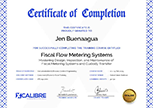
Upon successful completion of this training course, participants will be awarded a Certificate of Completion from XCalibre Training Centre, acknowledging their accomplishment. This certificate serves as a testament to their dedication to developing their skills and advancing their expertise in their respective fields.