
| Date | Venue | Fee | |
|---|---|---|---|
| 07 Dec - 11 Dec 2026 | Dubai – UAE | $ 5,950 | Register Now |
| 14 Dec - 18 Dec 2026 | London - UK | $ 5,950 | Register Now |
| 06 Dec - 10 Dec 2027 | Dubai – UAE | $ 5,950 | Register Now |
| 13 Dec - 17 Dec 2027 | London - UK | $ 6,950 | Register Now |
About the Course
Design for Additive Manufacturing (DfAM) enables engineers to develop components that take advantage of additive manufacturing while recognising the practical limitations of the selected manufacturing process. Unlike conventional manufacturing, where designs are often constrained by cutting tools, moulds, dies and assembly requirements, additive manufacturing can produce complex geometries, internal features, lightweight structures and consolidated components that may be difficult or impossible to manufacture using traditional methods. Successful DfAM, however, requires more than transferring an existing CAD model to an additive manufacturing machine. Component geometry must account for the selected AM process, material behaviour, build direction, support requirements, thermal effects, dimensional accuracy, surface condition, post-processing, inspection and final service requirements. Poor design decisions can result in excessive supports, distortion, defects, long build times, difficult finishing, failed builds and unnecessary production costs.
This 5-day Design for Additive Manufacturing (DfAM) training course provides a practical and industry-focused approach to assessing component suitability, selecting appropriate AM processes and materials, redesigning geometry and developing components for performance, manufacturability and production efficiency. Delegates will examine part screening, build orientation, support reduction, topology optimisation, lattice structures, part consolidation, dimensional considerations, design allowances, post-processing, inspection and design verification. It also examines how design decisions influence build success, material consumption, production time, component quality and total manufacturing cost. Industrial components, CAD-based examples, failed-build scenarios, design comparisons, case studies and practical workshops enable delegates to evaluate existing components and identify suitable AM opportunities. Delegates will strengthen their ability to develop practical DfAM solutions and make informed design decisions that improve component performance and manufacturing efficiency.
Core Objectives
The delegates will achieve the following objectives:
- Identify components and applications where additive manufacturing provides practical engineering and production benefits
- Select suitable AM processes and materials based on component geometry, service requirements, production quantity, quality and cost
- Evaluate existing component designs and apply DfAM rules to geometry, wall thickness, holes, overhangs, internal features and clearances
- Optimise build orientation and support requirements to reduce material consumption, build time, distortion and post-processing
- Apply topology optimisation, lattice structures and part consolidation to improve component performance and reduce unnecessary mass
- Incorporate post-processing, machining, surface finishing, inspection and dimensional requirements into component design
- Assess component manufacturability, quality risks, build efficiency and production cost to recommend practical DfAM improvements
Training Approach
This training course uses a practical, component-focused and design-based approach, introducing DfAM principles through real engineering components and manufacturing problems rather than isolated design theory. Delegates will examine conventional and AM-designed components to identify where geometry can be simplified, consolidated, reduced in weight or modified for more effective additive production. Practical exercises will address process and material selection, build orientation, support requirements, topology optimisation, design constraints, dimensional requirements, post-processing and inspection. Case studies and design workshops will require delegates to review component requirements, identify manufacturing constraints, compare alternative designs and make engineering decisions based on performance, manufacturability, quality, build time and cost. Technical discussions and practical problem-solving reinforce the development of components that can be manufactured successfully, meet their engineering requirements and provide clear technical or commercial value through additive manufacturing.
The Attendees
This training course is suitable for engineering and manufacturing professionals involved in product design, component development, additive manufacturing, production engineering and design improvement, including those responsible for evaluating and implementing AM opportunities.
A broad range of professionals will benefit, including but not limited to:
- Design and Product Development Engineers
- Mechanical Engineers
- Manufacturing and Production Engineers
- Additive Manufacturing Engineers
- Materials and Metallurgical Engineers
- CAD/CAE Engineers and Designers
- R&D and Innovation Engineers
- Quality and Inspection Engineers
- Process and Industrial Engineers
- Engineering and Manufacturing Managers
Daily Discussion
DAY ONE: EVALUATING COMPONENTS FOR ADDITIVE MANUFACTURING
- Component Suitability and Value for AM
- AM Compared with Machining, Casting, Moulding and Fabrication
- Component Requirements and AM Process Capabilities
- Geometry Opportunities for Additive Manufacturing
- AM Design Constraints and Redesign Requirements
- Performance, Production Volume, Lead Time and Cost Evaluation
DAY TWO: AM PROCESSES, MATERIALS AND DESIGN REQUIREMENTS
- AM Process Selection for Size, Geometry, Accuracy and Production Requirements
- AM Materials and Service Conditions
- Material Properties, Process Conditions and Component Performance
- Wall Thickness, Holes, Clearances, Overhangs and Critical Features
- Dimensional Accuracy, Surface Finish and Functional Interfaces
- Design Allowances for Finishing, Machining and Post-Processing
DAY THREE: COMPONENT REDESIGN AND OPTIMISATION FOR AM
- Conventional Component Redesign for Additive Production
- Weight Reduction, Strength and Functional Performance
- Topology Optimisation for Engineering Components
- Lattice and Internal Structures for Functional Performance
- Part Consolidation and Reduced Assembly Requirements
- Design Complexity, Manufacturability, Reliability and Cost
DAY FOUR: BUILD SUCCESS, QUALITY AND POST-PROCESSING
- Build Orientation for Quality and Production Efficiency
- Support Reduction and Accessibility
- Distortion, Residual Stress and Build-Related Design Risks
- Critical Surfaces and Features for Machining and Finishing
- Inspection and Verification of Complex AM Geometry
- Defects, Build Failures and Pre-Production Design Changes
DAY FIVE: DfAM INDUSTRIALISATION AND VALIDATION
- DfAM Workflow from Component Selection to Production
- Build Time, Material Use, Post-Processing and Manufacturing Cost
- Component Function, Dimensions, Quality and Service Performance
- AM Design and Original Manufacturing Route Comparison
- Repeatable Production, Qualification and Engineering Release
- Design Lessons and Future DfAM Applications
Certificate Awarded
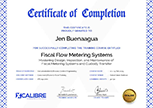
Upon successful completion of this training course, participants will be awarded a Certificate of Completion from XCalibre Training Centre, acknowledging their accomplishment. This certificate serves as a testament to their dedication to developing their skills and advancing their expertise in their respective fields.