
| Date | Venue | Fee | |
|---|---|---|---|
| 30 Nov - 04 Dec 2026 | Dubai – UAE | $ 5,950 | Register Now |
| 26 Apr - 30 Apr 2027 | Dubai – UAE | $ 5,950 | Register Now |
| 21 Jun - 25 Jun 2027 | London - UK | $ 6,950 | Register Now |
About the Course
Climate finance has evolved from a specialised discipline into a core component of financial strategy, driven by regulatory pressure, investor expectations, and the transition to low-carbon economies. Financial institutions, corporations, and governments are required to integrate climate considerations into investment decisions, risk management frameworks, and capital allocation processes. The increasing adoption of ESG standards, climate disclosure requirements, and carbon pricing mechanisms has redefined how financial performance and risk are assessed. Organisations must evaluate both transition risks and physical climate risks while identifying investment opportunities in renewable energy, infrastructure, and sustainable technologies. In many institutions, limited integration of climate data, weak risk assessment capability, and fragmented strategies result in exposure to regulatory penalties, stranded assets, and missed investment opportunities.
This interactive 5-day Climate Finance training course provides a structured approach to managing climate-related financial risks and opportunities. It integrates practical methods to evaluate climate investments, apply ESG frameworks, and align financial strategies with global climate objectives. Emphasis is placed on carbon markets, climate risk modelling, sustainable finance instruments, and regulatory compliance. Delegates will enhance their ability to assess financial exposure, structure climate-aligned investments, and support organisational transition strategies. It equips delegates with structured financial approaches and practical tools to strengthen decision-making, manage climate-related risks, and deliver sustainable financial outcomes.
Core Objectives
The delegates will achieve the following objectives:
- Interpret climate finance mechanisms and market structures
- Assess climate-related financial risk exposure
- Evaluate investment opportunities in sustainable and low-carbon sectors
- Apply ESG and sustainability frameworks in financial decisions
- Analyse the financial impact of climate policies and regulations
- Structure climate finance instruments and funding models
- Develop climate-aligned financial strategies
- Strengthen risk management and compliance capability
Training Approach
This training course adopts a structured and application-focused approach, integrating case-based discussions, financial modelling exercises, and scenario-driven applications to reinforce learning outcomes. Delegates will apply practical frameworks to evaluate investments, manage climate risks, and structure sustainable finance solutions.
The Attendees
This training course is designed for professionals involved in finance, investment, risk management, and sustainability strategy.
A broad range of professionals will benefit, including but not limited to:
- Financial Analysts
- Investment Managers
- Project Finance
- Infrastructure Professionals
- ESG and Sustainability Professionals
- Risk Management and Compliance Professionals
- Corporate Finance and Strategy Professionals
- Government and Regulatory Officials
- Consultants involved in sustainable finance and climate strategy
Daily Discussion
DAY ONE: CLIMATE FINANCE FRAMEWORKS AND MARKET STRUCTURES
- Climate Finance Principles and Market Evolution
- Global Climate Finance Flows and Capital Allocation
- Public and Private Finance Roles in Climate Transition
- Climate Finance Instruments (Green Bonds, Funds, Blended Finance)
- Climate Data, Metrics, and Reporting Requirements
- Climate Finance Opportunities Across Sectors
DAY TWO: CLIMATE RISK ASSESSMENT AND FINANCIAL EXPOSURE
- Physical and Transition Climate Risk Analysis
- Climate Risk Integration in Financial Decision-Making
- Scenario Analysis and Stress Testing for Climate Risk
- Carbon Pricing and Financial Exposure
- Climate Risk Disclosure and Reporting (TCFD, ISSB)
- Data Gaps in Climate Risk Modelling
DAY THREE: INVESTMENT STRATEGIES AND SUSTAINABLE FINANCE INSTRUMENTS
- Climate Investment Strategies and Portfolio Alignment
- Renewable Energy and Sustainable Infrastructure Financing
- Carbon Markets and Emissions Trading Systems
- Structuring Climate Finance Transactions and Funding Models
- Risk-Return Assessment in Climate Investments
- Greenwashing Risk and ESG Misrepresentation
DAY FOUR: POLICY, REGULATION, AND CORPORATE TRANSITION STRATEGIES
- Climate Policy Impact on Financial Markets
- Regulatory Requirements and Compliance Obligations
- Corporate Net-Zero Strategies and Financial Implications
- Sustainable Finance Taxonomies and Classification Systems
- Transition Planning and Capital Allocation Decisions
- Role of Financial Institutions in Climate Transition
DAY FIVE: CLIMATE FINANCE EXECUTION AND STRATEGY DEVELOPMENT
- Designing Climate Finance Strategies for Organisations
- Integrating Climate Finance into Corporate Strategy
- Monitoring Climate Investments and Performance Metrics
- Managing Implementation Risks and Constraints
- Delivering Sustainable Financial Outcomes
- Capital Misallocation in Transition Finance
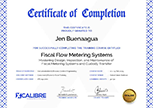
Certificate Awarded
Upon successful completion of this training course, participants will be awarded a Certificate of Completion from XCalibre Training Centre, acknowledging their accomplishment. This certificate serves as a testament to their dedication to developing their skills and advancing their expertise in their respective fields.