
| Date | Venue | Fee | |
|---|---|---|---|
| 29 Jun - 03 Jul 2026 | London - UK | $ 5,950 | Register Now |
| 03 Aug - 07 Aug 2026 | Dubai – UAE | $ 5,950 | Register Now |
| 12 Oct - 16 Oct 2026 | London - UK | $ 5,950 | Register Now |
| 26 Oct - 30 Oct 2026 | Prague - Czech Republic | $ 5,950 | Register Now |
| 12 Apr - 16 Apr 2027 | Dubai – UAE | $ 5,950 | Register Now |
| 28 Jun - 02 Jul 2027 | London - UK | $ 6,950 | Register Now |
| 02 Aug - 06 Aug 2027 | Dubai – UAE | $ 5,950 | Register Now |
| 11 Oct - 15 Oct 2027 | London - UK | $ 6,950 | Register Now |
| 06 Dec - 10 Dec 2027 | Dubai – UAE | $ 5,950 | Register Now |
About the Course
Asset integrity is essential for maintaining safe, reliable, and efficient operations across oil & gas facilities. Failures in equipment, pipelines, and processing systems can result in safety incidents, environmental impact, unplanned shutdowns, and significant financial losses. These risks are further intensified by ageing assets, complex operating conditions, and increasing regulatory expectations. A structured and systematic approach is therefore required to identify degradation mechanisms, monitor asset condition, and implement effective control measures throughout the asset lifecycle. Industry frameworks such as the American Petroleum Institute API 571 for damage mechanisms and API 580/581 for risk-based inspection provide essential guidance for managing integrity risks, prioritising inspection activities, and improving operational reliability.
This 5-day Asset Integrity and Loss Control in Oil & Gas Operations training course equips delegates with the capability to manage integrity systems, identify degradation threats, and minimise operational losses across facilities. It focuses on integrity frameworks, damage mechanisms, inspection strategies, condition monitoring, and loss control aligned with current industry practices. Delegates will enhance their ability to detect early signs of degradation, prioritise inspection using risk-based methodologies, and control failure-related losses. Emphasis is placed on integrating integrity management with operational performance, improving reliability, ensuring compliance, and sustaining asset value across oil & gas operations.
Core Objectives
By the end of the training course, delegates will be able to:
- Interpret asset integrity systems and lifecycle requirements across facilities
- Characterise damage mechanisms in accordance with API 571
- Implement risk-based inspection methodologies aligned with API 580/581
- Design inspection and condition monitoring strategies
- Quantify integrity-related losses and operational impacts
- Optimise asset reliability and performance outcomes
- Eliminate integrity gaps and loss control deficiencies
Training Approach
This training course delivers a structured and engineering-focused learning experience through expert-led instruction, failure analysis discussions, and applied exercises aligned with asset integrity and inspection practices.
The Attendees
This training course is suitable for professionals responsible for asset integrity, inspection, maintenance, and operational performance across oil & gas facilities.
A broad range of professionals will benefit, including but not limited to:
- Asset Integrity Engineers
- Inspection Engineers
- Reliability Engineers
- Maintenance Engineers
- Process Engineers
- Operations Engineers
- HSE Professionals
Daily Discussion
DAY ONE: ASSET INTEGRITY SYSTEMS AND GOVERNANCE STRUCTURE
- Asset Integrity Management Systems (AIMS) and Lifecycle Approach
- Integration of Integrity with Operations and Maintenance Functions
- Identification of Critical Equipment and Risk Ranking
- Integrity Roles, Responsibilities, and Governance Framework
- Alignment with Industry Standards (API, ISO Integrity Frameworks)
DAY TWO: DAMAGE MECHANISMS AND DEGRADATION PROCESSES (API 571)
- Corrosion Mechanisms (General, Localised, MIC)
- Erosion, Corrosion-Erosion, and Flow-Induced Damage
- Mechanical Damage (Fatigue, Creep, Thermal Stress)
- Process-Induced Damage Mechanisms and Material Degradation
- Application of API 571 Damage Mechanism Framework
DAY THREE: RISK-BASED INSPECTION AND CONDITION MONITORING (API 580/581)
- Principles of Risk-Based Inspection (RBI) Methodology
- Probability and Consequence of Failure Assessment
- Inspection Planning and Interval Optimisation
- Non-Destructive Testing (NDT) and Monitoring Techniques
- Integration of Inspection Data into Integrity Systems
DAY FOUR: LOSS MECHANISMS AND FAILURE IMPACT CONTROL
- Classification of Integrity-Related Losses (Leaks, Failures, Downtime)
- Quantification of Production and Financial Losses
- Leak Detection and Containment Strategies
- Root Cause Analysis of Integrity Failures
- Control Measures to Prevent Recurring Failures
DAY FIVE: PERFORMANCE OPTIMISATION AND RELIABILITY IMPROVEMENT
- Asset Performance Metrics and Integrity KPIs
- Maintenance and Reliability Improvement Strategies
- Integration of Integrity Data into Decision-Making
- Optimisation of Asset Availability and Lifecycle Performance
- Sustaining Integrity and Loss Control Practices
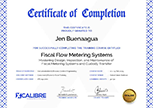
Certificate Awarded
Upon successful completion of this training course, participants will be awarded a Certificate of Completion from XCalibre Training Centre, acknowledging their accomplishment. This certificate serves as a testament to their dedication to developing their skills and advancing their expertise in their respective fields.