
| Date | Venue | Fee | |
|---|---|---|---|
| 23 Nov - 27 Nov 2026 | Dubai – UAE | $ 5,950 | Register Now |
About the Course
The global energy sector is undergoing unprecedented transformation as organisations balance traditional oil & gas investments with renewable energy, hydrogen, carbon capture, energy storage, and other low-carbon initiatives. At the same time, geopolitical uncertainty, commodity price volatility, inflationary pressures, evolving regulatory requirements, sustainability commitments, and increasingly sophisticated financing structures have made investment decision-making more complex than ever. Energy projects are characterised by significant capital expenditure, long asset lifecycles, technical uncertainty, and multiple commercial risks, requiring financial professionals to apply advanced financial and investment analysis techniques that support sound investment decisions, optimise capital allocation, and maximise long-term project value. Success depends on the ability to evaluate financial performance, assess project viability, understand funding alternatives, and manage financial risks throughout the project lifecycle.
This interactive 5-day Advanced Financial Analysis of Energy Projects training course equips delegates with the practical knowledge, analytical frameworks, and financial tools required to evaluate and manage complex energy investments across upstream, midstream, downstream, power, utilities, and emerging energy sectors. Delegates will develop expertise in financial statement analysis, project finance principles, capital budgeting, discounted cash flow valuation, investment appraisal, cost of capital, working capital optimisation, and financial risk assessment. It also examines modern financing strategies, including project finance structures, sustainable and green financing, scenario and sensitivity analysis, and value-based decision-making, enabling delegates to evaluate investment opportunities, support strategic business decisions, and improve the financial performance and resilience of energy projects in an increasingly dynamic global market.
Core Objectives
The delegates will achieve the following objectives:
- Interpret the application of IFRS, GAAP, and industry-specific accounting principles relevant to energy projects and capital investments
- Analyse financial statements, cash flows, and key financial performance indicators to evaluate the financial health and operational performance of energy projects
- Evaluate project costs, working capital requirements, and cost of capital to support effective financing and investment decisions
- Apply advanced capital budgeting and discounted cash flow techniques to assess the financial viability of energy projects under varying market conditions
- Assess investment opportunities using financial modelling, scenario analysis, sensitivity analysis, and risk-adjusted performance measures
- Develop financing strategies by evaluating alternative capital structures, project finance mechanisms, and sustainable financing options for energy investments
- Evaluate financial and market risks, including commodity price volatility, interest rate exposure, foreign exchange fluctuations, and the application of hedging instruments to support informed decision-making
- Recommend value-driven investment decisions that optimise project performance, enhance shareholder value, and strengthen long-term financial sustainability across the energy sector
Training Approach
This training course combines expert-led presentations, facilitated discussions, practical energy sector case studies, financial modelling exercises, advanced investment appraisal workshops, and collaborative problem-solving activities to strengthen delegates' analytical and decision-making capabilities. Delegates will apply financial analysis techniques to realistic energy project scenarios, including financial statement evaluation, capital budgeting, discounted cash flow valuation, scenario and sensitivity analysis, financing strategy assessment, and project risk evaluation. Practical exercises, group discussions, and instructor-guided case analyses will enable delegates to translate financial concepts into informed investment decisions and immediately apply best practices within their own organisations.
The Attendees
This training course is designed for finance, accounting, commercial, investment, and project professionals responsible for evaluating the financial performance, investment viability, funding strategies, and commercial success of energy projects across the oil & gas, power, utilities, renewable energy, and broader energy sectors.
A broad range of professionals will benefit, including but not limited to:
- Chief Financial Officers (CFOs)
- Finance Directors
- Senior Finance Managers
- Corporate Finance and Financial Planning Professionals
- Financial and Management Accountants
- Financial Controllers, Treasury, and Cash Management Professionals
- Financial, Investment, and Commercial Analysts
- Project Finance, Business Development, and Commercial Managers
- Project Controls and Cost Management Professionals
- Joint Venture Accountants, Internal and External Auditors
- Strategy, Investment, and Corporate Development Professionals
- Government Regulators, Financial Advisors, and Infrastructure Finance Specialists
Daily Discussion
DAY ONE: STRATEGIC FINANCIAL FRAMEWORK FOR ENERGY PROJECTS
- Global Energy Investment Trends
- Energy Project Economics
- Project Financing Models
- Value Creation Drivers
- Financial Risk Landscape
- Investment Performance Metrics
DAY TWO: ACCOUNTING AND FINANCIAL REPORTING FOR ENERGY PROJECTS
- IFRS and GAAP for Energy Projects
- Capitalisation of Energy Projects
- Development Cost Accounting
- Revenue Recognition and Asset Valuation
- Asset Impairment and Decommissioning Liabilities
- Financial Reporting for Investment Decisions
DAY THREE: FINANCIAL ANALYSIS OF ENERGY PROJECTS
- Financial Statement Analysis
- Trend and Comparative Analysis
- Financial Ratio Analysis
- Working Capital Optimisation
- Financial Performance Measurement
- Cost of Capital and WACC
DAY FOUR: CAPITAL INVESTMENT APPRAISAL FOR ENERGY PROJECTS
- Project Cash Flow Modelling
- Financial Modelling for Investment Appraisal
- Discounted Cash Flow Valuation
- Advanced Capital Budgeting
- Investment Appraisal Criteria
- Scenario and Sensitivity Analysis
DAY FIVE: FINANCING STRATEGIES FOR ENERGY PROJECTS
- Capital Structure Strategies
- Project Finance and Debt Structuring
- Equity and Alternative Financing
- Risk Allocation Strategies
- Sustainable Finance and ESG Investment
- Strategic Capital Allocation
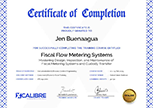
Certificate Awarded
Upon successful completion of this training course, participants will be awarded a Certificate of Completion from XCalibre Training Centre, acknowledging their accomplishment. This certificate serves as a testament to their dedication to developing their skills and advancing their expertise in their respective fields.