
| Date | Venue | Fee | |
|---|---|---|---|
| 06 Jul - 10 Jul 2026 | Dubai – UAE | $ 5,950 | Register Now |
| 24 Aug - 28 Aug 2026 | Washington DC - USA | $ 6,950 | Register Now |
| 21 Sep - 25 Sep 2026 | Abu Dhabi - UAE | $ 5,950 | Register Now |
| 12 Oct - 16 Oct 2026 | Cairo - Egypt | $ 5,950 | Register Now |
| 09 Nov - 13 Nov 2026 | Dubai – UAE | $ 5,950 | Register Now |
| 25 Jan - 29 Jan 2027 | London - UK | $ 6,950 | Register Now |
About the Course
Enterprise Risk Management (ERM) is no longer a compliance function confined to risk registers and reporting cycles. In an environment defined by geopolitical volatility, regulatory scrutiny, cyber exposure, supply chain fragility, financial uncertainty, and accelerated digital transformation, risk oversight has become a board-level priority. Executive leadership now expects risk frameworks to deliver forward-looking intelligence that informs strategic choices, protects enterprise value, and strengthens organisational resilience. Risk management must therefore operate as an integrated discipline embedded within strategy-setting, capital allocation, performance monitoring, and governance oversight.
This 5-day Advanced Enterprise Risk Management (ERM) Masterclass strengthens enterprise capability in designing and sustaining risk systems that align directly with strategic objectives. It is aligned with the principles of ISO 31000 and incorporates strategic integration concepts from COSO ERM, with a focus on governance architecture, risk appetite calibration, exposure quantification, interdependency analysis, Key Risk Indicator (KRI) development, scenario modelling, and executive-level reporting. Emphasis is placed on measurable exposure assessment, portfolio visibility, control effectiveness, and structured escalation pathways. Delegates will gain the capability to enhance enterprise-wide risk frameworks, improve transparency for boards and audit committees, strengthen regulatory defensibility, and embed risk intelligence into strategic decision-making across financial, operational, and compliance domains.
Core Objectives
The delegates will achieve the following objectives:
- Design and enhance enterprise-wide ERM architectures aligned with international best practice
- Embed risk oversight directly into strategic planning and performance management processes
- Define and calibrate risk appetite and tolerance thresholds aligned with board expectations
- Apply structured methodologies for risk identification, analysis, and prioritisation
- Quantify, aggregate, and interpret enterprise risk exposure across portfolios
- Develop and implement Key Risk Indicators (KRIs) linked to strategic objectives
- Strengthen board reporting, escalation discipline, and executive risk transparency
Training Approach
This training course adopts a structured, executive-oriented methodology combining governance framework mapping, exposure modelling exercises, scenario-based simulations, and board-reporting design workshops. Delegates will work through risk architecture alignment, exposure scoring techniques, escalation pathways, portfolio-level aggregation, and executive dashboard structuring using realistic enterprise scenarios. It emphasises measurable risk insight, strategic integration, decision-enabling analysis, and board-ready communication suitable for audit and risk committee environments.
The Attendees
This training course is suitable for senior leaders and risk professionals responsible for enterprise-level risk governance, strategic oversight, control integration, and board reporting.
A broad range of professionals will benefit, including but not limited to:
- Chief Risk Officers (CROs)
- Chief Financial Officers (CFOs)
- Heads of Risk and Senior Risk Managers
- Internal Audit Directors
- Compliance and Governance Executives
- Finance Directors and Senior Finance Leaders
- Strategy and Corporate Planning Executives
- Board Secretariat and Governance Advisors
- Operational and Enterprise Risk Leaders
- IT, Cyber, and Technology Risk Executives
- Business Unit Heads with Enterprise Risk Accountability
Daily Discussion
DAY ONE: ENTERPRISE RISK GOVERNANCE & STRATEGIC INTEGRATION
- Enterprise Risk Management as a Strategic Discipline
- Designing Governance Architecture and Accountability Structures
- Integrating Risk into Corporate Strategy and Objective-Setting
- Three Lines Model: Authority, Oversight, and Assurance
- Risk Appetite Framework Design and Calibration
- Aligning Risk Culture with Strategic Priorities
DAY TWO: RISK IDENTIFICATION, ANALYSIS & EXPOSURE PRIORITISATION
- Establishing Enterprise Risk Context and Scope
- Advanced Risk Identification Techniques
- Qualitative and Quantitative Exposure Assessment
- Probability–Impact Modelling and Aggregation
- Risk Interdependencies and Correlation Analysis
- Exposure Prioritisation and Executive Risk Ranking
DAY THREE: RISK MONITORING, KRIs & CONTROL DISCIPLINE
- Designing and Calibrating Key Risk Indicators (KRIs)
- Linking Risk Metrics to Strategic and Operational Objectives
- Risk-Control Self-Assessment (RCSA) Governance
- Control Effectiveness and Residual Exposure Analysis
- Escalation Thresholds and Executive Reporting Protocols
- Continuous Monitoring and Performance Integration
DAY FOUR: SCENARIO ANALYSIS, STRESS TESTING & RESILIENCE LEADERSHIP
- Strategic Scenario Planning Under Uncertainty
- Financial and Operational Stress Testing Methodologies
- Reverse Stress Testing and Vulnerability Analysis
- Crisis Simulation and Executive Escalation
- Business Continuity Integration and Resilience Governance
- Enterprise Risk Aggregation and Portfolio View
DAY FIVE: BOARD OVERSIGHT, RISK CULTURE & ERM MATURITY
- Board and Audit Committee Risk Responsibilities
- Designing Risk Reporting Architecture for Executive Decision-Making
- Risk Culture and Behavioural Oversight
- Integrating Risk with Strategic and Performance Reviews
- ERM Maturity Assessment and Continuous Improvement
- Designing a Sustainable and Adaptive Enterprise Risk Operating Model
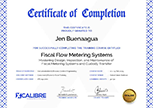
Certificate Awarded
Upon successful completion of this training course, participants will be awarded a Certificate of Completion from XCalibre Training Centre, acknowledging their accomplishment. This certificate serves as a testament to their dedication to developing their skills and advancing their expertise in their respective fields.