
| Date | Venue | Fee | |
|---|---|---|---|
| 29 Nov - 03 Dec 2026 | Riyadh – KSA | $ 5,950 | Register Now |
| 11 Jan - 15 Jan 2027 | London - UK | $ 6,950 | Register Now |
| 10 May - 14 May 2027 | Dubai – UAE | $ 5,950 | Register Now |
| 07 Jun - 11 Jun 2027 | London - UK | $ 6,950 | Register Now |
| 23 Aug - 27 Aug 2027 | Lisbon - Portugal | $ 6,950 | Register Now |
| 17 Oct - 21 Oct 2027 | Dubai – UAE | $ 5,950 | Register Now |
| 18 Oct - 22 Oct 2027 | Dubai – UAE | $ 5,950 | Register Now |
| 28 Nov - 02 Dec 2027 | Riyadh – KSA | $ 5,950 | Register Now |
About the Course
Achieving results across organisational boundaries increasingly depends on the ability to influence individuals and teams beyond formal reporting relationships. Matrix structures, cross-functional projects, and competing departmental priorities require professionals to secure cooperation, build credibility, and gain commitment without relying on positional power. Effective influence involves understanding stakeholder motivations, managing organisational dynamics, communicating persuasively, and developing relationships built on trust and mutual value. Professionals must also adapt their influence approaches to different personalities, conflicting expectations, and organisational challenges while maintaining constructive working relationships. Those who can manage resistance, reconcile differing interests, and encourage collaborative decisions are better positioned to overcome barriers and achieve shared objectives.
This interactive 5-day Influencing Without Authority training course develops the interpersonal, behavioural, and strategic influence capabilities required to gain cooperation and drive outcomes without direct managerial control. Delegates will examine informal influence, personal credibility, organisational power dynamics, stakeholder motivations, emotional intelligence, persuasive communication, relationship management, and collaborative negotiation. It also explores influence strategies, resistance management, constructive conflict resolution, stakeholder commitment, and collaboration across organisational boundaries. Through practical simulations and workplace-based scenarios, delegates will strengthen their ability to adapt influence approaches, communicate proposals convincingly, and manage competing interests. Delegates will also develop their ability to build collaborative agreements, secure voluntary commitment, and sustain productive stakeholder relationships while achieving organisational objectives.
Core Objectives
The delegates will achieve the following objectives:
- Analyse informal influence dynamics, organisational power structures, and the factors affecting cooperation without positional authority
- Assess personal influence capabilities and develop credibility, trust, and professional relationships across organisational boundaries
- Apply emotional intelligence and behavioural awareness to understand stakeholder motivations and adapt influence approaches
- Demonstrate persuasive communication, active listening, and constructive dialogue to gain support for ideas and proposals
- Employ collaborative negotiation and conflict resolution techniques to reconcile competing interests and address stakeholder resistance
- Formulate stakeholder influence strategies that encourage cross-functional cooperation and secure voluntary commitment
- Develop practical influence action plans to sustain stakeholder relationships and achieve results without formal authority
Training Approach
This training course will combine interactive presentations with influence self-assessments, organisational power mapping, stakeholder analysis exercises, interpersonal communication simulations, collaborative negotiation activities, and conflict resolution scenarios. Delegates will examine realistic workplace challenges involving matrix reporting structures, competing departmental objectives, stakeholder resistance, limited decision authority, and cross-functional coordination. Practical exercises will emphasise behavioural adaptability, persuasive communication, relationship development, ethical influence, and the application of influence strategies to secure cooperation and achieve shared organisational outcomes.
The Attendees
This training course is designed for individuals responsible for influencing decisions, coordinating cross-functional activities, securing stakeholder cooperation, and achieving organisational objectives without direct authority over the people involved.
A broad range of professionals will benefit, including but not limited to:
- Department Managers
- Business Unit Managers
- Project Managers
- Programme Managers
- Project Coordinators
- Team Leaders
- Functional Managers
- Matrix Team Leaders
- Operations Managers
- Engineering Managers
- Technical Specialists
- Senior Engineers
- Change Management Managers
- Organisational Development Managers
- Human Resources Managers
- Business Development Managers
- Account Managers
- Procurement Managers
- Supply Chain Managers
- Quality Managers
- Process Improvement Managers
- Transformation Managers
- Internal Consultants
- Strategic Partnership Managers
Daily Discussion
DAY ONE: INFORMAL INFLUENCE AND ORGANISATIONAL DYNAMICS
- Influence Without Positional Authority
- Formal and Informal Organisational Power
- Sources of Personal Influence and Credibility
- Organisational Politics and Influence Networks
- Influence Styles and Behavioural Preferences
- Ethical Influence and Professional Boundaries
DAY TWO: STAKEHOLDER INTELLIGENCE AND RELATIONSHIP BUILDING
- Stakeholder Interests and Motivations
- Emotional Intelligence in Influence Relationships
- Stakeholder Power and Influence Mapping
- Building Rapport and Interpersonal Trust
- Perspective-Taking and Behavioural Adaptability
- Relationship Strategies Across Organisational Boundaries
DAY THREE: PERSUASIVE COMMUNICATION AND INFLUENCE TECHNIQUES
- Influence Communication and Message Framing
- Active Listening and Strategic Questioning
- Persuasion Principles and Behavioural Triggers
- Evidence-Based Arguments and Value Propositions
- Communicating with Different Stakeholder Styles
- Influencing Decisions Through Constructive Dialogue
DAY FOUR: NEGOTIATION, RESISTANCE AND CONFLICT MANAGEMENT
- Collaborative Negotiation Without Formal Authority
- Identifying Shared Interests and Mutual Value
- Managing Objections and Stakeholder Resistance
- Constructive Conflict Resolution Techniques
- Managing Competing Priorities and Expectations
- Negotiating Mutually Acceptable Agreements
DAY FIVE: CROSS-FUNCTIONAL INFLUENCE AND SUSTAINABLE RESULTS
- Influence Strategies in Matrix Organisations
- Mobilising Cross-Functional Cooperation
- Influencing Senior Leaders and Decision-Makers
- Securing Commitment and Follow-Through
- Sustaining Cooperation and Stakeholder Reliability
- Personal Influence Action Planning
Certificate Awarded
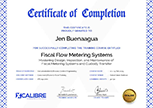
Upon successful completion of this training course, participants will be awarded a Certificate of Completion from XCalibre Training Centre, acknowledging their accomplishment. This certificate serves as a testament to their dedication to developing their skills and advancing their expertise in their respective fields.