

| Date | Venue | Fee | |
|---|---|---|---|
| 04 Oct - 08 Oct 2027 | Dubai – UAE | $ 5,950 | Register Now |
| 22 Nov - 26 Nov 2027 | Istanbul - Turkey | $ 6,950 | Register Now |
About the Course
Energy companies and large energy consumers face interconnected financial, commercial and operational risks that require continuous monitoring and effective control. Price volatility in crude oil, natural gas, electricity and carbon allowances, counterparty defaults, volumetric and weather-related risks, physical supply disruptions and evolving climate disclosure requirements can significantly affect financial performance and operational stability. The 2021–2022 European gas and power price crisis demonstrated how margin calls on hedged positions can create severe liquidity pressures, even when underlying commercial exposures remain economically protected. Managing these challenges requires an integrated approach to risk identification, measurement, mitigation and oversight across energy operations and trading activities. Organisations must therefore strengthen their ability to assess market exposures, manage financial obligations and maintain effective risk governance in increasingly volatile and interconnected energy markets.
The Certified Energy Risk Management Professional training course applies ISO 31000:2018 and COSO Enterprise Risk Management guidance to energy-related risk assessment and control. Delegates will develop risk registers, interpret forward curves, calculate Value at Risk (VaR) and Potential Future Exposure (PFE), and design hedging strategies using futures, swaps and options. It also examines portfolio stress testing, climate scenarios developed by the Network for Greening the Financial System (NGFS), risk governance, risk limits, hedge accounting under IFRS 9 and climate-related disclosures under IFRS S2. Through practical calculations, case studies and applied risk management exercises, delegates will strengthen their ability to develop energy risk policies, establish risk limits and prepare board-level risk reports to support informed decision-making and organisational resilience.
Core Objectives
The delegates will achieve the following objectives:
- Develop energy risk registers aligned with ISO 31000:2018 and COSO Enterprise Risk Management guidance, covering market, credit, operational and climate exposures
- Analyse energy prices, forward curves, spreads and volatility across oil, natural gas, electricity and carbon markets
- Calculate portfolio market risk using Value at Risk (VaR), Expected Shortfall (ES) and sensitivity metrics
- Design energy hedging strategies using futures, forwards, swaps and options
- Assess counterparty credit and liquidity risks using Potential Future Exposure (PFE), netting arrangements and collateral management practices
- Evaluate operational and climate-related risks through stress testing and scenario analysis using scenarios developed by the Network for Greening the Financial System (NGFS)
- Develop energy risk policies, risk limits and reporting practices, incorporating relevant hedge accounting requirements under IFRS 9 and climate-related disclosure requirements under IFRS S2
Training Approach
This training course combines 65% practical applications and 35% technical instruction through expert-led presentations, spreadsheet-based exercises using historical crude oil, natural gas, electricity and carbon allowance price data, and hands-on activities covering exposure mapping, forward curve construction, Value at Risk (VaR), Expected Shortfall (ES), option pricing and hedge ratio analysis. Through case studies of documented energy market events, including the 2021–2022 European gas crisis and counterparty failures, alongside group exercises involving risk registers, hedging proposals, credit limits and climate stress testing, delegates will develop an integrated energy risk policy and board-level risk report, supported by practical calculation workbooks and templates for workplace application.
The Attendees
This training course is designed for professionals responsible for identifying, assessing, managing, monitoring and reporting energy-related risks across energy production, trading, utilities, industrial operations and financial services organisations.
A broad range of professionals will benefit, including but not limited to:
- Energy Risk Managers and Risk Analysts
- Energy Traders, Originators and Portfolio Managers
- Commodity Procurement and Energy Purchasing Managers
- Treasury, Finance and Hedge Accounting Professionals
- Credit Risk and Collateral Managers
- Enterprise Risk Management and Internal Audit Professionals
- Strategy, Planning and Commercial Managers in Oil, Gas and Electricity
- Sustainability and Climate Risk Specialists
Daily Discussion
DAY ONE: ENERGY RISK FUNDAMENTALS AND GOVERNANCE
- Energy Value Chains and Associated Risk Exposures
- Energy Risk Classification: Market, Credit, Liquidity, Operational, Regulatory and Climate Risks
- ISO 31000:2018 Risk Management Principles, Framework and Process
- COSO Enterprise Risk Management Framework and the IIA Three Lines Model
- Risk Appetite, Risk Tolerance and Risk Ownership
- Risk Assessment Techniques Guided by IEC 31010:2019
DAY TWO: ENERGY MARKETS, PRICING AND PRICE RISK
- Crude Oil Benchmarks and Refined Product Pricing: Brent, WTI, Dubai and Product Spreads
- Natural Gas and LNG Pricing Benchmarks: Henry Hub, TTF and JKM
- Wholesale Electricity Markets, Merit Order and Price Spikes
- Carbon Markets and Emissions Allowance Pricing
- Forward Curves, Price Spreads, Basis Risk and Seasonality
- Price Volatility, Correlation and Mean Reversion in Energy Markets
DAY THREE: RISK MEASUREMENT AND HEDGING INSTRUMENTS
- Energy Risk Exposure Mapping, Position Reporting and Data Reconciliation
- Value at Risk (VaR): Historical Simulation, Parametric and Monte Carlo Simulation Methods
- Expected Shortfall (ES), Stress Testing and Backtesting
- Futures, Forwards and Swaps for Energy Hedging
- Energy Options, Collars and Option Sensitivities
- Hedge Programme Design, Hedge Ratios and Basis Risk
DAY FOUR: CREDIT, LIQUIDITY AND OPERATIONAL RISK
- Counterparty Credit Risk Assessment and Credit Limit Setting
- Potential Future Exposure (PFE) and Credit Valuation Adjustment (CVA)
- Energy Trading Master Agreements, Netting and Collateral Arrangements: ISDA and EFET
- Margin Calls, Central Clearing and Liquidity Stress Testing
- Operational and Physical Asset Risks in Energy Production and Supply
- Volumetric, Weather-Related, Geopolitical and Supply Disruption Risks
DAY FIVE: CLIMATE RISK, REGULATION AND RISK REPORTING
- Physical and Transition Climate Risks for Energy Businesses
- Climate Scenario Analysis Using NGFS and IEA Scenarios
- Energy Market Conduct, Trade Surveillance and Regulatory Compliance
- Hedge Accounting Under IFRS 9 and Climate-Related Disclosures Under IFRS S2
- Energy Risk Policy Development and Risk Limit Design
- Key Risk Indicators (KRIs), Risk Dashboards and Board-Level Reporting
Certificate Awarded
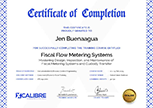
Upon successful completion of this training course, participants will be awarded a Certificate of Completion from XCalibre Training Centre, acknowledging their accomplishment. This certificate serves as a testament to their dedication to developing their skills and advancing their expertise in their respective fields.
Course Enquiry

A XCalibre Professional Development Certification will be given to the delegates upon successful completion of this training course.