
| Date | Venue | Fee | |
|---|---|---|---|
| 26 Jul - 30 Jul 2027 | London - UK | $ 6,950 | Register Now |
| 20 Sep - 24 Sep 2027 | Dubai – UAE | $ 5,950 | Register Now |
About the Course
Boiler systems operate under demanding thermal, pressure, and cyclic loading conditions that directly affect plant safety, reliability, and production continuity. Across power generation, refining, petrochemical, and heavy industrial facilities, compliance with the ASME Boiler & Pressure Vessel Code (BPVC), the National Board Inspection Code (NBIC), and applicable API practices are essential to maintain pressure boundary integrity and controlled operation. Aging assets, high-temperature exposure, corrosion mechanisms, and operational transients increase the risk of tube failures, overpressure events, and forced shutdowns when inspection and repair controls are inadequate. Engineering personnel must therefore understand not only code requirements but also how design limits, inspection findings, and repair decisions influence remaining life and safe operating margins.
This intensive 5-day ASME BPVC, API and NBIC Boiler Operation, Maintenance, Inspection, Repairs, and Alterations training course provides a structured and applied examination of boiler construction requirements, operational control systems, inspection scope, repair compliance, and lifecycle management under recognised industry codes. Delegates will analyse how MAWP principles, overpressure protection, degradation assessment, welding qualification, and post-repair verification translate into practical decision-making within plant environments. It connects code intent with mechanical integrity execution, enabling delegates to evaluate risk exposure, support compliance audits, and justify continued service of pressure components. Emphasis is placed on strengthening technical judgment to enhance reliability, maintain regulatory conformity, and sustain safe long-term boiler performance.
Core Objectives
The delegates will achieve the following objectives:
- Interpret the scope and application of ASME BPVC, NBIC, and relevant API practices for boiler systems
- Evaluate design pressure limits, MAWP determination, and overpressure protection requirements
- Assess inspection findings and degradation mechanisms affecting pressure boundary integrity
- Differentiate between repairs and alterations and ensure compliance with R-Stamp obligations
- Validate welding qualification, pressure testing, and post-repair verification requirements
- Support mechanical integrity strategies that enhance reliability, safety, and regulatory conformity
Training Approach
This training course is delivered through expert-led presentations, structured technical discussions, and guided application aligned with recognised industry codes and operational practices. The methodology integrates regulatory interpretation with practical plant scenarios to strengthen professional judgement, compliance awareness, and mechanical integrity control.
The Attendees
This training course is suitable for engineering and technical professionals responsible for ensuring the safe operation, inspection compliance, repair control, and lifecycle integrity of boiler and fired pressure systems operating under recognised code jurisdiction.
A broad range of professionals will benefit, including but not limited to:
- Mechanical Engineers
- Boiler and Utility Engineers
- Inspection Engineers and Authorised Inspectors
- Maintenance Engineers and Supervisors
- Reliability and Mechanical Integrity Engineers
- Plant and Operations Engineers
- Technical Managers responsible for pressure systems
Daily Discussion
DAY ONE: CODE ARCHITECTURE AND BOILER CONSTRUCTION REQUIREMENTS
- Structure and Scope of ASME BPVC for Boiler Construction
- NBIC Role in Post-construction Inspection and Compliance
- API Interface with fired Pressure Equipment Integrity
- Boiler Classification and Pressure Boundary Definition
- Design Pressure, Temperature Limits, and MAWP Principles
- Code Stamping, Data Reports, and National Board Registration
DAY TWO: BOILER OPERATION AND PROTECTION SYSTEMS
- Safe Start-Up and Shutdown Sequences
- Combustion Systems and Burner Management Control
- Feedwater Systems and Water Quality Control
- Blowdown Strategy and Solids Concentration Control
- Safety Valve Installation and Overpressure Protection
- Operational Deviation Recognition and Corrective Response
DAY THREE: INSPECTION AND MECHANICAL INTEGRITY CONTROL
- NBIC Inspection Scope and Interval Requirements
- Internal and External Inspection Planning
- Thickness Assessment and Corrosion Rate Evaluation
- Degradation Mechanisms in Boilers and Fired Equipment
- NDE Method Selection under ASME Requirements
- Inspection Records and Regulatory Documentation
DAY FOUR: REPAIRS, ALTERATIONS, AND CODE COMPLIANCE
- Repair vs Alteration under NBIC
- R-Stamp Repair Organisation Responsibilities
- Welding Qualification under ASME Section IX
- Pressure Boundary Restoration and Material Traceability
- Post-repair Pressure Testing and Verification
- Data Report Updates and Regulatory Notification
DAY FIVE: RISK MANAGEMENT AND LIFECYCLE STRATEGY
- Mechanical Integrity Programme Structure for Boiler Systems
- Risk-based Inspection Principles aligned with API practices
- Failure Mechanisms in Boiler Pressure Parts
- Root Cause Analysis of Tube Rupture and Creep Damage
- Quality Assurance and Audit Readiness
- Remaining Life Assessment and Service Life Extension
Certificate Awarded
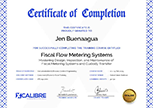
Upon successful completion of this training course, participants will be awarded a Certificate of Completion from XCalibre Training Centre, acknowledging their accomplishment. This certificate serves as a testament to their dedication to developing their skills and advancing their expertise in their respective fields.