
| Date | Venue | Fee | |
|---|---|---|---|
| 14 Sep - 18 Sep 2026 | Dubai – UAE | $ 5,950 | Register Now |
| 23 Nov - 27 Nov 2026 | Barcelona - Spain | $ 5,950 | Register Now |
About the Course
Liquid transmission pipelines operate under sustained internal pressure, variable flow conditions, environmental exposure, and external loading influences that directly affect structural reliability and operational safety. The ASME B31.4 standard establishes engineering requirements governing the design, materials, construction, inspection, testing, operation, and maintenance of pipeline systems transporting liquid hydrocarbons and other liquids. Improper interpretation or inconsistent application of these requirements can increase the risk of leakage, rupture, environmental impact, regulatory enforcement, and unplanned operational disruptions. Engineers responsible for pipeline systems must therefore understand not only the technical provisions of the standard but also how design decisions, construction controls, and integrity findings influence long-term performance and compliance.
This intensive 5-day ASME B31.4 Pipeline Transportation Systems for Liquid Hydrocarbons and Other Liquids training course provides a structured and applied examination of pipeline design, construction controls, operational management, inspection requirements, defect assessment, and repair compliance across the full lifecycle. It addresses design pressure determination, wall thickness evaluation, material selection, welding controls, hydrostatic testing, corrosion management, defect assessment, and repair requirements. Delegates will analyse how operational limits, inspection results, and integrity management strategies translate into sound engineering judgement within active pipeline environments. Emphasis is placed on strengthening technical competence to support safe operation, maintain regulatory conformity, reduce failure risk, and optimise long-term asset reliability.
Core Objectives
The delegates will achieve the following objectives:
- Explain the intent and application of ASME B31.4 within liquid pipeline system design and operation
- Examine pipeline design parameters, including pressure limits, wall thickness, and material suitability, to support compliant engineering decisions
- Review construction quality assurance measures, welding controls, and hydrostatic testing requirements to confirm installation integrity
- Diagnose corrosion risks, inspection outcomes, and integrity management indicators affecting pipeline performance
- Distinguish defect classifications and select appropriate repair and fitness-for-service approaches under recognised standards
- Implement risk-based inspection concepts to optimise maintenance planning and integrity prioritisation
- Formulate coordinated lifecycle strategies that align design, construction, operation, and integrity management objectives
Training Approach
This training course is delivered through expert-led presentations, structured technical discussions, and guided application aligned with ASME B31.4 requirements and practical pipeline operations. The methodology integrates regulatory interpretation with applied engineering scenarios to strengthen professional judgement, compliance assurance, and integrity management capability.
The Attendees
This training course is intended for engineering and technical professionals responsible for the design, construction oversight, operation, inspection, and integrity management of liquid hydrocarbon pipeline systems operating under recognised industry standards.
A broad range of professionals will benefit, including but not limited to:
- Pipeline Design Engineers
- Pipeline Integrity Engineers
- Welding and NDE Engineers
- Inspection Engineers and Field Inspectors
- Maintenance and Reliability Engineers
- Project Engineers and Construction Supervisors
- Mechanical Engineers involved in pipeline systems
- Technical Managers responsible for pipeline operations
Daily Discussion
DAY ONE: PIPELINE DESIGN BASIS AND CODE REQUIREMENTS
- Scope and Application of ASME B31.4
- Pipeline Classification and Location Factors
- Design Pressure, Wall Thickness, and Allowable Stress Principles
- Material Selection and Fracture Control Considerations
- External Loads, Crossings, and Environmental Influences
- Design Documentation and Compliance Verification
DAY TWO: MATERIALS, CONSTRUCTION, AND TESTING CONTROLS
- Material Specifications and Traceability Requirements
- Welding Procedures and Qualification Standards
- Inspection and Non-Destructive Examination Requirements
- Field Construction Quality Assurance
- Coating Systems and Corrosion Protection Measures
- Hydrostatic Testing Procedures and Acceptance Criteria
DAY THREE: OPERATION AND INTEGRITY MANAGEMENT
- Operating Pressure Control and System Monitoring
- Leak Detection Methods and System Reliability
- Corrosion Mechanisms in Liquid Pipeline Systems
- Cathodic Protection Systems and Performance Evaluation
- Integrity Management Programme Structure
- Inspection Data Analysis and Risk Prioritisation
DAY FOUR: MAINTENANCE, DEFECT ASSESSMENT, AND REPAIR METHODS
- Defect Identification and Evaluation Criteria
- Repair Methods Permitted under ASME B31.4
- Weld Repair and Sleeve Installation Requirements
- Pressure Reduction and Temporary Repair Controls
- Fitness-for-Service Decision Principles
- Regulatory Reporting and Compliance Confirmation
DAY FIVE: RISK CONTROL AND LIFECYCLE STRATEGY
- Risk-based Inspection Principles for Pipeline Systems
- Failure Mechanisms in Liquid Hydrocarbon Pipelines
- Root Cause Analysis of Rupture and Leak Incidents
- Incident Prevention and Mitigation Strategies
- Asset Life Extension and Integrity Optimisation
- Audit Preparedness and Regulatory Enforcement Response
Certificate Awarded
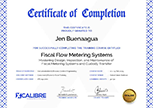
Upon successful completion of this training course, participants will be awarded a Certificate of Completion from XCalibre Training Centre, acknowledging their accomplishment. This certificate serves as a testament to their dedication to developing their skills and advancing their expertise in their respective fields.