| Date | Venue | Fee | |
|---|---|---|---|
| 18 May - 22 May 2026 | London - UK | $ 5,950 | Register Now |
| 20 Jul - 24 Jul 2026 | Munich - Germany | $ 5,950 | Register Now |
| 14 Sep - 18 Sep 2026 | London - UK | $ 5,950 | Register Now |
| 16 Nov - 20 Nov 2026 | Dubai – UAE | $ 5,950 | Register Now |
About the Course
Corrosion management is a critical component of asset integrity in oil and gas operations, where failures can lead to safety incidents, environmental impact, and significant financial loss. Effective control of corrosion requires structured identification of damage mechanisms, monitoring strategies, and mitigation measures across all stages of the asset lifecycle, from design and operation to maintenance and inspection. In complex processing environments, corrosion risks are influenced by process conditions, materials, and operating practices, making systematic management essential. The American Petroleum Institute RP 970 recommended practice provides a structured framework for developing Corrosion Control Documents (CCD) that define corrosion circuits, identify threats, and establish monitoring and mitigation requirements to ensure operational reliability and compliance.
This 5-day API RP 970 – Corrosion Control Documents training course equips delegates with the capability to develop, implement, and maintain CCDs aligned with API requirements. It focuses on corrosion threat identification, circuit definition, monitoring and inspection planning, mitigation strategies, and compliance verification within asset integrity systems. Delegates will enhance their ability to define corrosion circuits, select appropriate monitoring techniques, and integrate CCDs into inspection and maintenance programmes. Emphasis is placed on improving inspection effectiveness, managing corrosion risks, and ensuring consistent implementation across operational teams. Upon completion, delegates will be equipped to support reliable asset performance, minimise corrosion-related failures, and maintain compliance with industry standards.
Core Objectives
The delegates will achieve the following objectives:
- Diagnose corrosion threats and damage mechanisms across process systems
- Assess corrosion circuits and system boundaries in operating facilities
- Formulate Corrosion Control Documents aligned with API RP 970 requirements
- Construct monitoring and inspection strategies for corrosion control
- Evaluate mitigation techniques and corrosion prevention methods
- Measure corrosion performance using inspection and monitoring data
- Advance corrosion management practices within asset integrity frameworks
Training Approach
This training course delivers a structured and technical learning experience through expert-led sessions, corrosion-focused discussions, and applied exercises aligned with API RP 970 implementation practices.
The Attendees
This training course is designed for professionals responsible for corrosion management, inspection, and asset integrity within oil & gas operations.
A broad range of professionals will benefit, including but not limited to:
- Corrosion Engineers
- Inspection Engineers
- Integrity Engineers
- Process Engineers
- Maintenance Engineers
- Asset Integrity Specialists
- Operations Engineers
Daily Discussion
DAY ONE: API RP 970 FRAMEWORK AND CCD FUNDAMENTALS
- Overview of API RP 970 Scope and Requirements
- Purpose, Structure, and Content of CCD
- Identification of Corrosion Threats and Damage Mechanisms
- Definition of Corrosion Circuits and System Boundaries
- Integration of CCD within Asset Integrity Systems
DAY TWO: CORROSION MECHANISMS AND DAMAGE ASSESSMENT
- Identification of Internal and External Corrosion Mechanisms
- Evaluation of Process Conditions Influencing Corrosion
- Damage Mechanism Assessment and Susceptibility Analysis
- Risk-Based Evaluation of Corrosion Threats
- Mapping Corrosion Risks Across Process Units
DAY THREE: MONITORING AND INSPECTION STRATEGIES
- Selection of Corrosion Monitoring Techniques
- Inspection Methods and NDT Applications
- Monitoring Locations and Frequency Determination
- Data Collection and Validation of Corrosion Data
- Integration with Risk-Based Inspection (RBI)
DAY FOUR: MITIGATION AND CORROSION CONTROL STRATEGIES
- Chemical Treatment and Corrosion Inhibition
- Coatings, Cathodic Protection, and Material Selection
- Operational Controls to Reduce Corrosion Risk
- Evaluation of Mitigation Effectiveness
- Integration of Mitigation Strategies into CCD
DAY FIVE: CCD DEVELOPMENT, IMPLEMENTATION, AND COMPLIANCE
- Development of Corrosion Control Documents
- Documentation of Monitoring, Inspection, and Mitigation Plans
- Implementation Across Operations and Maintenance Teams
- Review and Updating of CCD Based on Field Data
- Compliance, Audit, and Verification
Certificate Awarded
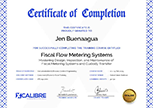
Upon successful completion of this training course, participants will be awarded a Certificate of Completion from XCalibre Training Centre, acknowledging their accomplishment. This certificate serves as a testament to their dedication to developing their skills and advancing their expertise in their respective fields.