
| Date | Venue | Fee | |
|---|---|---|---|
| 11 May - 15 May 2026 | Dubai – UAE | $ 5,950 | Register Now |
| 12 Oct - 16 Oct 2026 | Dubai – UAE | $ 5,950 | Register Now |
About the Course
The integrity of welded joints directly influences the reliability and safe operation of pressure vessels, piping systems, storage tanks, and other static equipment within refinery and petrochemical facilities. Improper welding practices, inadequate inspection controls, or insufficient understanding of metallurgical behaviour can result in premature failure, cracking, distortion, and loss of containment. API Recommended Practice 577 provides guidance for welding processes, inspection methods, metallurgical considerations, and documentation requirements necessary to support sound engineering judgement and inspection decision-making. For professionals preparing for API 577 certification, a structured understanding of welding fundamentals and inspection principles is essential to ensure both examination readiness and field competence.
The API 577: Welding Inspection and Metallurgy (API Exam Preparation Training) course delivers a practical and applied review of welding processes, heat input effects, weld metallurgy, procedure qualification, non-destructive examination methods, and defect evaluation in alignment with API 577 guidance. It integrates inspection planning, welding documentation review, welder qualification requirements, and acceptance criteria into a cohesive technical framework. Delegates will strengthen their ability to evaluate welding procedures, interpret inspection findings, and assess metallurgical factors influencing weld performance. Emphasis is placed on reinforcing technical judgement, improving inspection oversight, and enhancing readiness for the API 577 certification examination.
Core Objectives
The delegates will achieve the following objectives:
- Interpret welding processes and metallurgical factors affecting weld performance in pressure equipment
- Review welding procedure specifications (WPS) and procedure qualification records (PQR) to confirm technical compliance
- Evaluate welder qualification status and consumable control in relation to applicable standards
- Analyse inspection controls across pre-weld, in-process, and post-weld activities
- Assess non-destructive examination methods and their relevance to weld acceptance decisions
- Identify weld discontinuities and metallurgical conditions that may compromise integrity
- Enhance inspection judgement and professional readiness for the API 577 certification examination
Training Approach
This training course is delivered through expert-led technical briefings, structured inspection reviews, and guided application aligned with API 577 guidance and related industry standards. The methodology reinforces practical inspection evaluation and metallurgical interpretation to enhance professional competence and certification preparedness.
The Attendees
This training course is intended for technical professionals responsible for welding inspection, procedure qualification review, metallurgical assessment, and quality assurance of welded components within pressure equipment and static facilities.
A broad range of professionals will benefit, including:
- Welding Inspectors
- Quality Control and Quality Assurance Engineers
- Materials and Metallurgical Engineers
- Inspection Engineers and NDE Specialists
- Reliability and Integrity Engineers
- Mechanical Engineers responsible for static equipment
- Professionals preparing for the API 577 Certification Examination
Daily Discussion
DAY ONE: WELDING FUNDAMENTALS AND METALLURGY BASICS
- Welding Processes Overview (SMAW, GTAW, GMAW, FCAW, SAW)
- Welding Terminology, Symbols, and Joint Types
- Metallurgical Principles Influencing Weld Quality
- Heat-Affected Zone (HAZ) Characteristics
- Material Properties and Microstructure Effects on Welds
- Preheating, Interpass, and Cooling Rate Control
DAY TWO: WELDING PROCEDURES AND QUALIFICATIONS
- Welding Procedure Specifications (WPS) Fundamentals
- Procedure Qualification Records (PQRs) for Compliance
- Review of Welding Procedure Documentation
- Welder Performance Qualification (WPQ) Requirements
- Weldability Factors and Base Metal Compatibility
- Consumables Selection and Control
DAY THREE: WELD INSPECTION PRACTICES AND NDE METHODS
- Pre-Weld Inspection Practices and Criteria
- In-process Inspection and Control Checkpoints
- Post-Weld Visual Inspection and Acceptance Criteria
- Non-Destructive Examination (NDE) Techniques Overview
- Relative Merits and Limitations of NDE Methods
- Interpretation of NDE Results and Defect Significance
DAY FOUR: METALLURGICAL EFFECTS AND WELD DEFECTS
- Common Welding Discontinuities and Their Causes
- Metallurgical Effects on Weld Integrity and Failure Modes
- Distortion and Residual Stress Management
- Repair and Rework Criteria for Deficient Welds
- Hot Tapping and In-Service Welding Considerations
- Safety Precautions and Hazard Control during Welding Inspection
DAY FIVE: API 577 EXAM PREPARATION AND TECHNICAL INTEGRATION
- API Certification Exam Structure and Requirements
- Integration of API, ASME, AWS Requirements in Practice
- Mock Examination Questions with Rationale Review
- Case Scenarios for Inspection Decision-making
- Documentation and Reporting for Certified Inspectors
- Exam Preparedness Strategies
- Mock Examination
Certificate Awarded
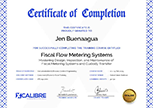
Upon successful completion of this training course, participants will be awarded a Certificate of Completion from XCalibre Training Centre, acknowledging their accomplishment. This certificate serves as a testament to their dedication to developing their skills and advancing their expertise in their respective fields.