
| Date | Venue | Fee | |
|---|---|---|---|
| 27 Jul - 31 Jul 2026 | Dubai – UAE | $ 5,950 | Register Now |
| 14 Sep - 18 Sep 2026 | Barcelona - Spain | $ 5,950 | Register Now |
| 02 Nov - 06 Nov 2026 | London - UK | $ 5,950 | Register Now |
About the Course
Overpressure remains one of the most critical process safety risks in refinery, petrochemical, and gas processing facilities, where equipment operates under elevated pressures, high temperatures, and dynamic operating conditions. Effective pressure relief and depressurisation strategies are essential to protect personnel, prevent equipment failure, and maintain regulatory compliance. Industry-recognised guidance provides structured approaches for identifying credible overpressure scenarios, determining relieving loads, selecting appropriate relief devices, and designing flare and disposal systems capable of managing emergency releases. Inadequate evaluation of relief scenarios, backpressure effects, or dynamic depressuring behaviour can compromise containment integrity, escalate fire risk, and expose facilities to significant operational and environmental consequences.
This intensive 5-day API 521: Pressure Relieving and Depressuring Systems training course provides a structured and applied examination of overpressure protection philosophy, relief device selection, flare system hydraulics, and emergency depressurisation strategy. It integrates scenario identification, vapour and two-phase flow considerations, backpressure analysis, radiation limits, rupture disk application, and blowdown system performance into a coherent engineering framework. Delegates will strengthen their ability to evaluate protection layers, validate system capacity, and assess performance limitations during abnormal operations. Emphasis is placed on reinforcing technical judgement to support safe design reviews, plant modifications, and the long-term integrity of pressure protection systems.
Core Objectives
The delegates will achieve the following objectives:
- Interpret overpressure protection philosophy and its impact on facility risk exposure
- Evaluate relief load assumptions and scenario credibility during design and modification reviews
- Direct appropriate selection and application of pressure safety valves and rupture devices
- Assess flare system capacity, hydraulic constraints, and radiation compliance under emergency conditions
- Oversee depressurisation strategy to manage fire escalation and equipment integrity risks
- Validate relief and flare system adequacy against abnormal and upset operating scenarios
- Strengthen integrated overpressure protection governance aligned with corporate process safety objectives
Training Approach
This training course is delivered through expert-led technical briefings, structured engineering reviews, and guided application aligned with recognised industry standards. The approach reinforces relief and flare system design principles through scenario-based evaluation to strengthen engineering judgement, system validation, and overpressure risk control.
The Attendees
This training course is intended for engineering and safety professionals accountable for the design, validation, operation, and integrity of pressure relieving and depressurising systems within refinery, petrochemical, and gas processing facilities.
A broad range of professionals will benefit, including:
- Process Engineers
- Process Safety Engineers
- HAZOP and Risk Assessment Engineers
- Operations and Plant Engineers
- Pressure Relief and Flare System Engineers
- Mechanical Engineers responsible for pressure systems
- Technical Managers responsible for process safety
Daily Discussion
DAY ONE: OVERPRESSURE PHILOSOPHY AND RELIEF SCENARIOS
- Causes of Overpressure and Protection Layers
- Identification of Credible Relief Scenarios
- Fire Case Evaluation and Heat Input Considerations
- Blocked Outlet, Control Valve Failure, and Thermal Expansion Cases
- Reaction Runaway and Utility Failure Scenarios
- Relief Design Basis Documentation and Scenario Justification
DAY TWO: RELIEF DEVICE SELECTION AND SIZING PRINCIPLES
- Pressure Safety Valve Types and Operating Characteristics
- Conventional, Balanced, and Pilot-Operated Valve Selection Criteria
- Rupture Disks and Combination Device Applications
- Set Pressure, Accumulation, and Allowable Overpressure Limits
- Vapour, Liquid, And Two-Phase Relieving Rate Determination
- Relief Device Sizing Methodology and Capacity Verification
DAY THREE: FLARE SYSTEM DESIGN AND HYDRAULIC PERFORMANCE
- Flare System Configuration and Header Network Design
- Backpressure Analysis and Hydraulic Limitations
- Sonic Flow, Mach Number, and Choked Flow Considerations
- Knockout Drum Sizing and Liquid Handling Principles
- Thermal Radiation Limits and Safe Separation Distances
- Purge Gas Systems, Smokeless Operation, and Environmental Control
DAY FOUR: DEPRESSURING AND EMERGENCY BLOWDOWN SYSTEMS
- Depressurisation Philosophy and Protection Objectives
- Blowdown Valve Selection and Actuation Systems
- Dynamic Depressuring Behaviour and Time-to-Depressure Analysis
- Minimum Metal Temperature and Brittle Fracture Risk
- Fire Exposure Effects during Depressurisation
- Integration of Depressuring Systems with Flare Capacity
DAY FIVE: SYSTEM VALIDATION, INTEGRITY, AND RISK CONTROL
- Relief System Adequacy Review and Design Verification
- HAZOP Interface with Relief and Flare System Design
- Common Relief and Flare System Deficiencies
- Performance Limitations During Abnormal Operations
- Risk-Based Validation of Flare and Depressuring Capacity
- Lifecycle Management of Pressure Protection Systems
Certificate Awarded
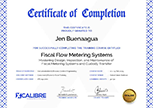
Upon successful completion of this training course, participants will be awarded a Certificate of Completion from XCalibre Training Centre, acknowledging their accomplishment. This certificate serves as a testament to their dedication to developing their skills and advancing their expertise in their respective fields.